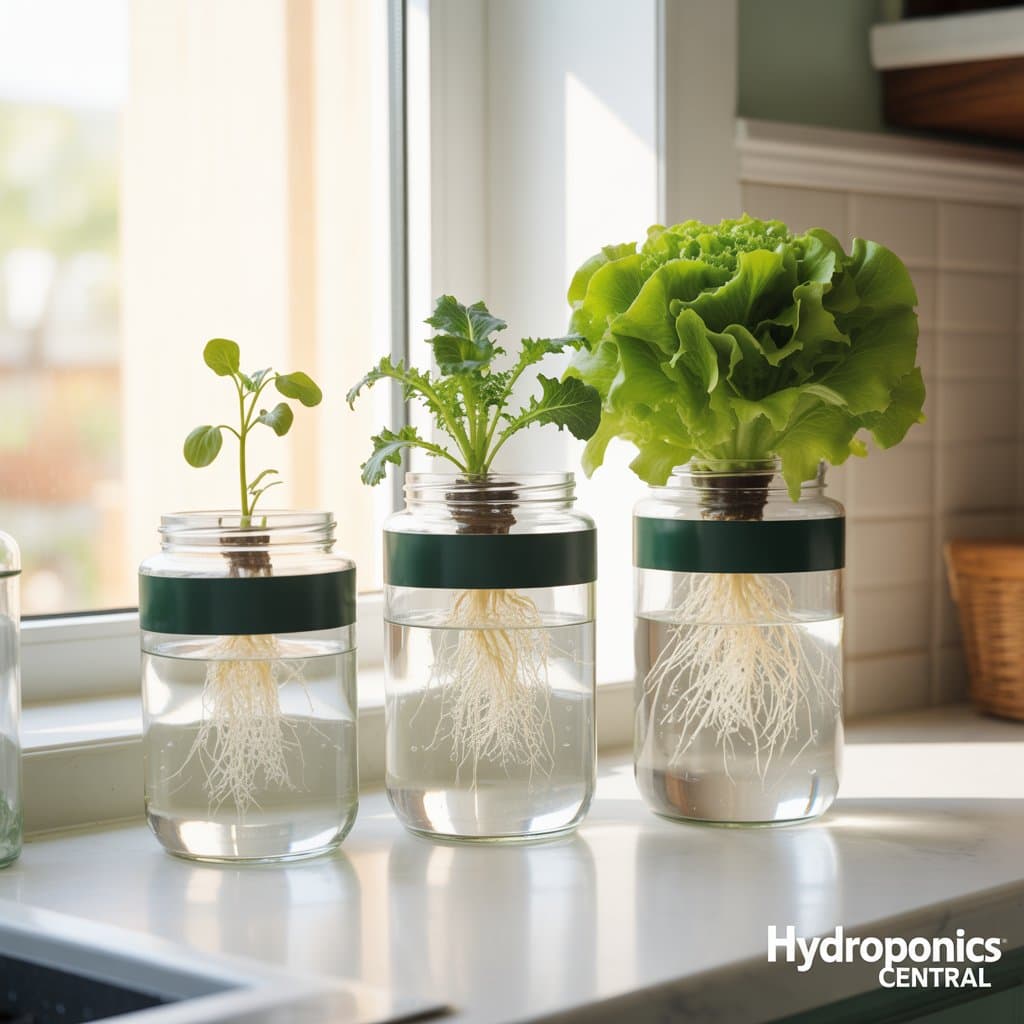
Hydroponic nutrients are a complete mineral solution dissolved in water — they replace everything soil normally provides, from the nitrogen that drives leaf growth to trace amounts of iron and manganese plants need to function at the cellular level. Get this right and your plants grow faster than they would in dirt. Get it wrong and they show deficiency symptoms within days, because there is no soil buffer to compensate.
I researched this through university extension resources on controlled environment agriculture, commercial nutrient manufacturer data, and community growing documentation. I'm a content curator, not a chemist or agronomist — everything here is sourced so you can verify it, and I'll give you real prices and specific products rather than vague brand categories. All prices reflect current retailer listings as of May 2026 and should be confirmed before purchasing.
What are hydroponic nutrients?
Hydroponic nutrients are water-soluble mineral salts that supply every element a plant needs to grow, dissolved directly into the reservoir water. In soil, plants extract nutrients from decaying organic matter and mineral particles over weeks and months, with a biological buffer of billions of microorganisms replenishing what's consumed. In a hydroponic system, there is no buffer — so every element must be present in the water, in the correct chemical form, at the right concentration, every time the roots drink.
Short-season, non-fruiting crops are the best choices for home hydroponic production, according to the University of Minnesota Extension — partly because their nutrient requirements are simpler and more forgiving than fruiting crops like tomatoes. But whether you're growing herbs or tomatoes, the nutrient fundamentals are the same.
Plants require 17 essential elements to complete their lifecycle. Three come from air and water (carbon, hydrogen, oxygen). The remaining 14 must come from the nutrient solution.
Primary macronutrients (needed in the largest quantities):
- Nitrogen (N) — drives vegetative growth, leaf production, and chlorophyll synthesis
- Phosphorus (P) — root development, flowering, and energy transfer
- Potassium (K) — water movement, disease resistance, and fruit quality
Secondary macronutrients (needed in moderate quantities):
- Calcium (Ca) — cell wall structure. Deficiency causes tip burn in lettuce and blossom end rot in tomatoes
- Magnesium (Mg) — the central atom of chlorophyll. Deficiency shows as yellowing between leaf veins while veins stay green (interveinal chlorosis)
- Sulfur (S) — enzyme function and protein synthesis
Micronutrients (needed in trace amounts but still essential):
Iron, manganese, zinc, copper, boron, molybdenum, chlorine, and nickel. These appear in tiny concentrations but a deficiency in any one of them stops plant growth. This is why "complete" nutrient formulas matter — a partial formula that omits micronutrients will produce plants that look normal until a deficiency appears weeks in.

Why hydroponics demands complete nutrition
In healthy garden soil, a single teaspoon contains billions of microorganisms that break down organic matter into plant-available nutrients over months. The USDA estimates a gram of fertile topsoil contains between 100 million and 1 billion bacteria — a biological buffer that constantly replenishes what plants consume. A tomato plant in soil that gets slightly too little iron today can compensate tomorrow as more becomes available through microbial activity and mineral weathering.
In hydroponics, there is no tomorrow. If calcium isn't in your reservoir, your plant has no calcium. If your iron is at the wrong pH, it locks out chemically and becomes unavailable even though it's technically dissolved in the water. This is why hydroponic-specific nutrient products exist — they're formulated to be water-soluble, fully balanced, and stable at the pH ranges hydroponic systems operate in.
This also means your nutrient solution can become imbalanced over time even if you're topping up regularly. Plants absorb nitrogen, phosphorus, and potassium at different rates depending on their growth stage — a plant in heavy vegetative growth pulls nitrogen faster than everything else. After two weeks without a full reservoir change, what's left is whatever the plant didn't consume, not a balanced solution. This is why complete reservoir changes every 7–14 days matter.
Liquid nutrients vs powder nutrients
The first practical choice you'll make is format: liquid concentrate or dry powder. Both work. The differences are real.
Practical verdict: If you're running one to three Kratky jars or a small countertop system, liquid nutrients cost more but require almost no learning curve — measure, pour, check EC and pH. If you're scaling to ten or more plants or want to minimise ongoing costs significantly, powder delivers the same results at a fraction of the price once you've learned the mixing order.
Single-part vs multi-part nutrient systems
Single-part systems — one bottle or one powder — contain everything in a fixed ratio. You add one product to water. No decisions about mixing ratios between multiple bottles.
Multi-part systems (2-part or 3-part) separate nutrients into different components — typically a "grow" formula high in nitrogen, a "bloom" formula high in phosphorus and potassium, and a "micro" formula supplying calcium, magnesium, and trace elements. You combine them in different ratios depending on your plant's growth stage.
For a first system growing herbs or lettuce, single-part is the right choice. The fixed ratio in a quality single-part product is designed to support healthy growth without requiring stage-specific adjustments. Once you're growing fruiting crops or want to deliberately push different growth stages, multi-part gives you that control.
The best hydroponic nutrients by budget
The options below are the products most consistently used by home growers and consistently referenced across university extension hydroponic growing programmes. Prices are approximate and should be confirmed directly with retailers before purchasing.
Budget option: Masterblend 4-18-38 kit (~$25–$40 for a complete 1 lb starter kit)
Masterblend is a commercial-grade powder system that became popular with home growers because of its exceptionally low cost per gallon. The full kit requires three components mixed in a specific order: Masterblend 4-18-38, calcium nitrate, and Epsom salt (magnesium sulfate). Each component is available separately; starter kits bundle all three.
Mixing ratio (per gallon of water):
- 2.4g calcium nitrate — add first, dissolve fully before adding anything else
- 2.4g Masterblend 4-18-38 — add second, stir until dissolved
- 1.2g Epsom salt — add last, stir until dissolved
The order is not optional. Calcium nitrate must dissolve completely before you add Masterblend — mixing them simultaneously or in the wrong order causes calcium to bind with sulfate and precipitate as a white sludge that cannot be used. This is the most common Masterblend mistake.
The resulting solution costs approximately $0.07 per gallon — roughly 4–8 times cheaper per gallon than comparable liquid systems.
Best for: Growers who want the lowest long-term cost and are willing to learn the three-step mixing process. Not ideal if you want to grab one bottle and go.
Mid-range: General Hydroponics MaxiGro and MaxiBloom (~$15–$25 per pound)
MaxiGro and MaxiBloom are one-part powder nutrients from General Hydroponics — one of the most widely used hydroponic nutrient brands globally. MaxiGro (6-15-36 NPK) is formulated for vegetative growth; MaxiBloom (5-15-14 NPK) for flowering and fruiting. You switch products when plants transition from producing leaves to producing fruit.
Mixing rate: 7g per gallon as a starting point, then adjust EC up or down by adding more product or diluting with water.
Best for: Beginners who want the simplicity of one product without the multi-step Masterblend mixing process. MaxiGro is the single easiest nutrient product to start with.
Mid-range: General Hydroponics Flora Series 3-part (~$30–$50 for a quart set of all three bottles)
The Flora Series (FloraMicro, FloraGro, FloraBloom) is the industry-standard 3-part liquid system. General Hydroponics publishes a free feed schedule with precise ratios for every growth stage and crop type. The ability to adjust ratios between the three bottles — more nitrogen during vegetative growth, more phosphorus during flowering — is the main advantage over single-part systems.
Sample mixing ratio (vegetative phase, per gallon):
- 5ml FloraMicro
- 10ml FloraGro
- 5ml FloraBloom
Best for: Growers growing fruiting crops (tomatoes, peppers, cucumbers) who want to adjust ratios by growth stage. For herbs and lettuce, the Flora Series works well but the stage-specific control is less critical.
Premium: Fox Farm Trio (~$55–$75 for a quart set)
Fox Farm (Big Bloom, Grow Big, Tiger Bloom) is a 3-part liquid system with an organic base component. The feed schedule is more complex and the cost per gallon is the highest of these options. It produces excellent results but the performance difference over mid-range systems does not justify the price gap for most beginner growers. The organic inputs make it a reasonable choice if organic certification matters to you.

Organic vs synthetic nutrients in hydroponics
Most commercial hydroponic nutrients are synthetic — mineral salts formulated for immediate water solubility. Organic nutrients (seaweed extracts, fish emulsions, worm casting teas) are technically usable but create real challenges in hydroponic systems.
Organic inputs introduce undissolved particles that clog drip emitters, colonise reservoir walls with bacterial films, and create unpredictable nutrient concentration and pH. They're also harder to formulate as complete solutions — most organic products lack adequate micronutrient profiles without supplementation.
If organic growing matters to you, coco coir or soil-based systems are better suited. Hydroponic systems can run with organic inputs but require significantly more maintenance and monitoring. For beginners, start with synthetic nutrients and introduce organic supplements (such as beneficial bacteria like Hydroguard) once the fundamentals are solid.
Understanding EC and PPM
EC (electrical conductivity) measures how many dissolved nutrients are in your water by testing how well the solution conducts electricity. Pure water conducts almost nothing — EC near zero. As you add mineral salts, conductivity rises. Most budget-friendly EC meters are accurate to ±0.1 mS/cm, which is sufficient for home growing.
PPM (parts per million) is an alternate concentration measurement derived from EC. The two most common conversion scales are the 500 scale (EC × 500 = PPM) and the 700 scale (EC × 700 = PPM). Your meter's manual will specify which scale it uses.
Target EC ranges by crop type:
These ranges are drawn from published hydroponic EC and nutrient management references and represent starting points — adjust based on how your specific plants respond over time.
An EC reading rising between top-ups means plants are consuming more water than nutrients — add plain pH-adjusted water. An EC reading falling faster than expected means plants are feeding heavily — top up with nutrient solution at your working concentration.
How to mix your first nutrient solution
Mixing a hydroponic nutrient solution correctly takes about five minutes and requires tracking two numbers: EC to confirm nutrient concentration, and pH to confirm the nutrients are in a form roots can absorb. The order of operations matters — add all nutrients before checking pH, not after, because nutrients shift the pH of water and you would have to adjust twice otherwise.
What you need:
- Nutrient product (powder or liquid)
- EC/TDS pen meter (~$15–$30 for a reliable budget option)
- pH meter (~$50–$80 for a reliable digital meter)
- pH Down solution (phosphoric acid, ~$10–$15)
- pH Up solution (potassium hydroxide, ~$10–$15)
- Measuring syringe or digital kitchen scale (for powder nutrients)
Step-by-step:
- 1 Start with clean water. If using tap water, check the starting EC — most tap water reads 0.1–0.4 EC. Subtract this from your target EC to calculate how much nutrient to add.
- 2 Add your nutrients. For Masterblend: calcium nitrate first, fully dissolved, then Masterblend, then Epsom salt. For liquid systems: add one component at a time, stir between additions.
- 3 Check EC and adjust. If EC is below target, add more nutrient concentrate in small increments. If above target, add plain water to dilute.
- 4 Check pH. The target for most crops is 5.5–6.5. Add pH Down in 1ml increments to lower it; pH Up in 1ml increments to raise it. Wait 15 minutes after each addition before rechecking — pH adjustment takes time to fully equilibrate in the water.
- 5 Recheck EC after pH adjustment. Some pH products contain mineral salts that affect EC slightly.
- 6 Fill your reservoir and record your starting readings. Write down EC and pH so you have a baseline to compare against when you check again in 48 hours.
Nutrient schedule basics
Most beginners run a single nutrient concentration for the full life of the plant. This works well for herbs and lettuce. For fruiting crops, adjusting the nutrient ratio between vegetative and fruiting stages significantly improves yield.
Vegetative stage (seedling to first flowers): Higher nitrogen, moderate phosphorus and potassium. MaxiGro, or the Flora Series at a veg-heavy ratio.
Transition (first buds to first fruit set): Reduce nitrogen, increase phosphorus and potassium. MaxiBloom, or Flora Series adjusted toward bloom ratios.
Fruiting (active fruit development): Low nitrogen, high phosphorus and potassium. Run at the upper end of your EC range.
For a herb and lettuce system, this level of stage-specific management isn't necessary. Run MaxiGro or your standard Masterblend ratio from seedling to harvest.
Common nutrient mistakes
The most common hydroponic nutrient problems are not failures of the product — they are failures of process. Mixing order, pH timing, and reservoir change frequency account for the majority of issues beginners encounter, regardless of which nutrient brand they use.
Mixing Masterblend components in the wrong order. Calcium nitrate must dissolve completely before Masterblend is added. Mixing them simultaneously causes calcium sulfate precipitation — a white sludge that removes calcium from the solution. Dissolve calcium nitrate, stir for 60 seconds, then add Masterblend.
Adjusting pH before adding nutrients. Nutrients change the pH of water. If you adjust pH first and then add nutrients, the pH shifts again and you're adjusting twice. Add all nutrients, check EC, then check and adjust pH as the final step.
Not changing the reservoir. After two weeks, your reservoir contains whatever your plants didn't consume — not a balanced solution. A full change every 7–14 days maintains a consistent, complete nutrient profile.
Overfeeding seedlings. New plants germinated into a reservoir running 2.0+ EC experience nutrient burn from the start. Begin seedlings at 0.5–0.8 EC and increase gradually as plants establish over the first two weeks.
Assuming more nutrients means faster growth. Beyond the optimal EC range, excess nutrients cause stress — they draw water out of roots osmotically rather than into them. Follow target EC ranges by crop type and resist adding extra product.
My take as a curator
Hydroponic nutrients narrow to a simple choice quickly. Masterblend if you want the lowest long-term cost and are willing to learn a three-step mixing process. MaxiGro if you want a single product and maximum simplicity. Flora Series if you want stage-specific control for fruiting crops.
Start with the product you'll actually use consistently. A beginner who mixes MaxiGro correctly every week gets better results than one who buys Masterblend and mixes it in the wrong order half the time. Get EC and pH under control first — once those two numbers are stable, you can experiment with different products or stage-specific ratios.
What surprised me most in the research: the cost difference between options is enormous relative to the yield difference. Masterblend at roughly $0.07 per gallon versus Fox Farm Trio at roughly $0.50 per gallon produces comparable results for most beginner crops. The premium is largely brand recognition and organic inputs, not meaningfully better plant performance for the majority of home growers.
For managing the pH of whatever solution you mix, see our pH for hydroponics guide. For full system builds that show how nutrients fit into a complete setup, see our DIY hydroponic garden guide.
Join 1,000+ growers getting one curated hydroponic tip every week — subscribe to the Hydroponics Central newsletter. Free, no spam.
Key Takeaways
Quick reference summary
- 1Hydroponic plants need 17 essential elements delivered entirely through water — there is no soil to draw from. If an element isn't in your reservoir, your plant has none of it.
- 2Masterblend 4-18-38 kit (~$25–$40) is the most cost-effective option at roughly $0.07 per gallon. General Hydroponics Flora Series (~$30–$50 for a quart set) is the industry standard for growers who want adjustable ratios by growth stage.
- 3EC (electrical conductivity) measures nutrient concentration. Most beginner crops need 0.8–2.0 EC depending on crop type. Too high causes nutrient burn; too low causes deficiency.
- 4pH and nutrients are inseparable — above pH 7.0, iron locks out chemically even if EC looks correct. Always check and adjust pH after mixing nutrients, not before.
- 5Change your reservoir completely every 7–14 days. Between changes, top up with plain pH-adjusted water as the level drops.
- 6Powder nutrients (Masterblend, MaxiGro) have a 3–5 year shelf life and cost 50–70% less per gallon than liquid equivalents. Liquid nutrients are easier to measure but cost more over time.
Frequently Asked Questions
Common questions from our readers
Written by
Carl — Hydroponics CuratorI research hydroponics so you don't have to — going through university studies, extension programs, and grower communities to find what actually works for home growers.
I'm a content curator and researcher, not a licensed agronomist or commercial grower. Everything published here is sourced from credible third-party research, which is always linked inline. When in doubt, consult your local agricultural extension office. Learn more about how I research →
Found this helpful? Share it!