Hydroponic tower gardens range from $50 to $899 at purchase — but Year 1 ownership costs run from $230 to over $1,600, and that gap is almost entirely determined by the pod system, not tower quality. The best hydroponic tower garden for most apartment growers is the Lettuce Grow Nook (~$499–$699, prices verified May 2026 — always confirm on brand sites before purchasing): LEDs are built in, it holds 20 plants in 2 square feet, and it eliminates the $300–$600 separate lighting purchase that catches most tower buyers off guard after checkout.
I'm Carl — a content curator, not a licensed agronomist. Most tower garden "best of" lists show you purchase prices and pod counts but skip the Year 1 ownership cost — which is the number that actually determines whether a tower is affordable to run. Everything here is sourced from brand sites, verified retailer pricing, and documented community user reports. For full specs and all seven systems side by side, the hydroponic garden tower guide has the detail. This post makes the call.
What actually makes a tower garden "the best"
The best tower garden isn't the one with the most pods or the slickest app — it's the one that costs least to own long-term and matches how much attention you want to give it. Four criteria determine that: ongoing cost, whether LEDs are included in the price, the pod system, and pump reliability. Get these right before you look at anything else.
Ongoing cost, not purchase price. Year 1 total costs — pods, nutrients, electricity, lights — range from $230 (budget Amazon) to over $1,600 (Gardyn Home 4). Open-system towers using standard net pots with any seed cost 3–5× less to own over 2 years than proprietary pod systems. For any tower you plan to run beyond six months, Year 1 total cost is the figure to compare — not the purchase price.
Whether LEDs are included. Indoor towers need 12–16 hours of full-spectrum light daily. Several towers that advertise $350–$699 prices require a separate $300–$600 LED kit to actually function indoors — a cost many buyers only discover after checkout. The Lettuce Grow Nook and Gardyn include LEDs in their price. The ALTO GX, Lettuce Grow Farmstand (large version), and Tower Garden HOME do not.
Open vs. proprietary pods. Proprietary systems (Gardyn's yCubes, Tower Garden's pods) lock you into ordering from one supplier at $3–5 per pod, replaced every 2–3 months. Open systems (ALTO GX, budget Amazon towers) use standard net pots with any seed and any growing medium — ongoing cost under $20/year in growing medium.
Pump reliability. Every tower runs on one submersible pump. Research and user reports document failures at 12–18 months in Gardyn and Lettuce Grow systems. When the pump fails, aeroponic roots can dry out in hours; hydroponic roots last longer but nutrient delivery stops. A $15 spare pump that fits your reservoir is the single best investment for any tower, bought before you ever need it.
Best hydroponic tower garden by profile
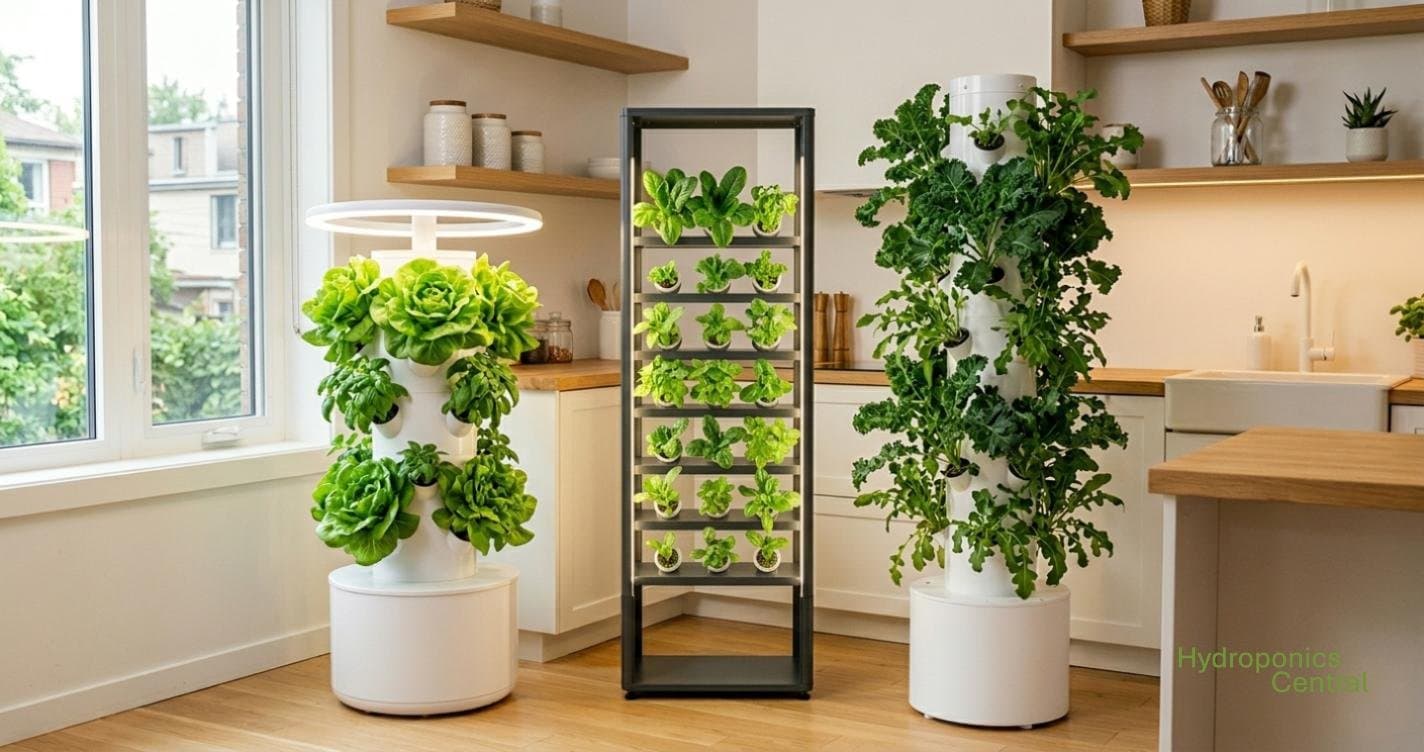
For most home growers, the Lettuce Grow Nook is the best overall pick — LEDs included, 20 plants in 2 square feet, no forced subscription. For growers who want zero proprietary lock-in, the ALTO Garden GX. For large crops like squash and melons, Tower Garden HOME is the only option on this list that handles them. The profiles below explain exactly why.
Best overall: Lettuce Grow Nook (~$499–$699)
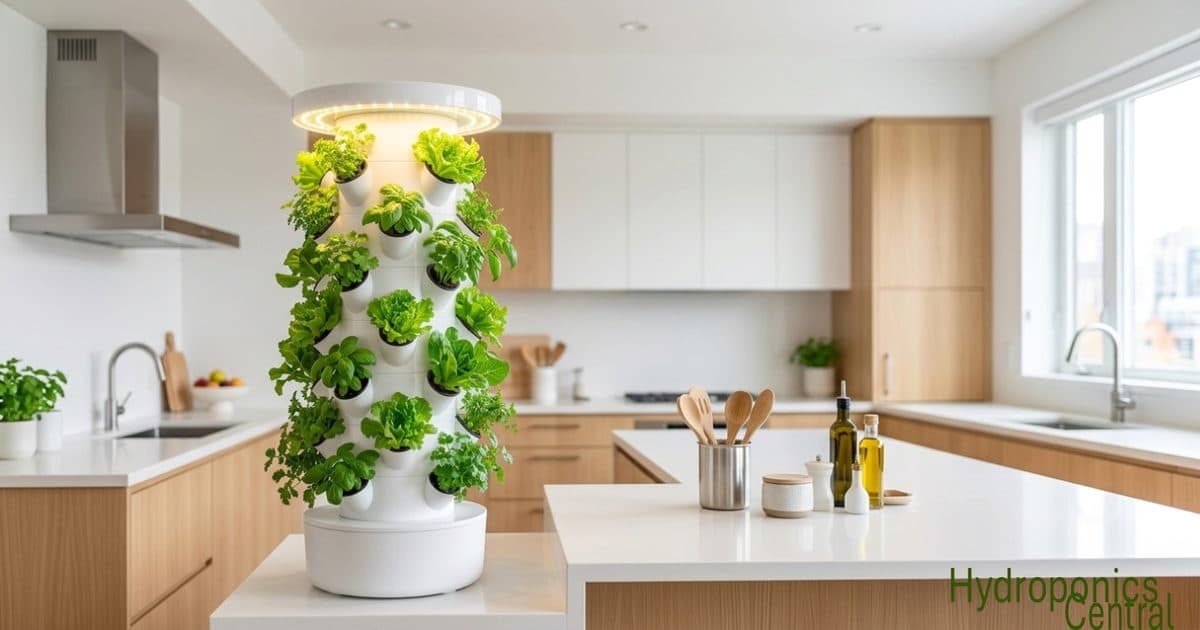
The Nook solves the two problems that undermine most tower purchases: LEDs are built in so there's no surprise $300–$600 lighting add-on, and you can use Lettuce Grow's $3 pre-sprouted seedlings or start your own in rockwool plugs — no forced subscription. The 20-plant capacity covers herbs and salad greens for a household of 1–4 people. At roughly 3 feet tall, it fits on a counter or in a corner without dominating the room.
The price spread is real — currently ~$499 at Costco vs. ~$699 on the Lettuce Grow website. Check both before buying. The ~8-gallon reservoir typically needs topping up once or twice a week when fully planted — manageable, but worth building into your routine. One caveat: the Lettuce Grow Farmstand's Glow Ring LED lights (used in the larger version) have accumulated reports of electrical failure in the community forum. The Nook uses a different integrated LED design — not the Glow Ring — but given that track record, it's worth checking current Nook-specific reviews before purchasing. Pump noise is minimal, quieter than a desktop fan.
For the complete Nook breakdown — reservoir volume, pump specs, and crop compatibility — see the full tower garden comparison guide.
Best for zero lock-in: ALTO Garden GX (~$200–$350 without lights)
The ALTO GX is the right tower for growers who want total seed freedom — no subscriptions, no proprietary orders, no reorder commitments. Standard net pots take any seed and any growing medium, and the tower holds 24 plants in a food-safe, BPA-free polypropylene body with 2mm walls — noticeably thicker than most budget competitors. At $200–$350 without lights (a lights bundle adds roughly $300), it's the least expensive way to own a well-built open system. There's no app and no smart features — you manage pH and nutrients manually, which is the trade-off for complete independence from any brand's supply chain.
If you already own LED panels or are planning an outdoor setup, the ALTO GX is the most cost-efficient premium tower available.
Best for hands-off automation: Gardyn Home 4 (~$899)
The Gardyn Home 4 is the most automated hydroponic tower available — its AI assistant Kelby monitors plants via camera, adjusts watering schedules, and sends harvest reminders. For growers who don't want to manage pH timing and nutrient schedules manually — or for households where the tower needs to run largely on its own — Kelby's automation is the actual product. Setup is under 15 minutes, genuinely plug-and-play. It holds 30 plants, includes LEDs, and stands about 5 feet tall.
The cost is the honest barrier. At $899 purchase plus $400–$600/year in proprietary yCube pods, Year 1 totals $1,400–$1,600. What I didn't expect when I ran the numbers: Year 2 alone ($500–$700) costs more than the full purchase price of the Lettuce Grow Nook. The 6-gallon reservoir needs topping up roughly twice a week when fully planted — more frequently than most competitors — so factor that into where you place it. If the total cost gives you pause, start with the Lettuce Grow Nook and see whether you'll actually use a tower consistently before committing to Gardyn's ongoing cost structure. Some users report a noticeable pump hum in quiet rooms — check recent reviews if noise sensitivity matters in your space.
Best first tower for beginners: Budget Amazon tower ($50–$150)
A budget tower (VEVOR, BAOSHISHAN, and others) isn't the best tower. It's the best first tower. At $50–$150, it teaches you what the nutrient cycle actually feels like — how pH drifts, how much light your crops need, what a clogged pump looks like — before you spend $500+ on a premium system. Open net pots mean any seed, no pod costs, and no commitment to a brand. If tower growing turns out not to fit your routine, you've risked $100, not $900.
The trade-offs are documented: buyer reviews flag flimsy construction and poorly translated instructions, setup takes 1–2 hours, and pump noise varies by model — check the specific model's reviews before buying. What I found consistent across budget tower reviews: the build quality complaints matter less than whether the included pump is undersized. An underpowered pump can't push water to the top of the column, leaving upper plants dry regardless of how well everything else is set up — and it's the most common cause of failure in this category.
Best for large crops: Tower Garden HOME (~$670, LEDs sold separately ~$290)
Tower Garden HOME is the only home tower that reliably grows squash, cauliflower, cherry tomatoes, and melons. Its aeroponic design — roots misting in open air rather than sitting in growing medium — produces 20–30% more plant biomass than hydroponic systems, and its structural capacity handles plants too heavy for any other tower on this list.
A fully indoor-ready setup costs ~$960+. Tower Garden is sold through Juice Plus consultants — not retail stores — which makes pricing less transparent than Amazon or direct-to-consumer brands. Aeroponic systems are also the least forgiving if the pump fails: roots dry out within hours rather than over a day. If herbs and greens are your primary goal, Tower Garden HOME's premium is hard to justify against the Lettuce Grow Nook. But if you want to grow large crops vertically, there's no comparable alternative in the home market.
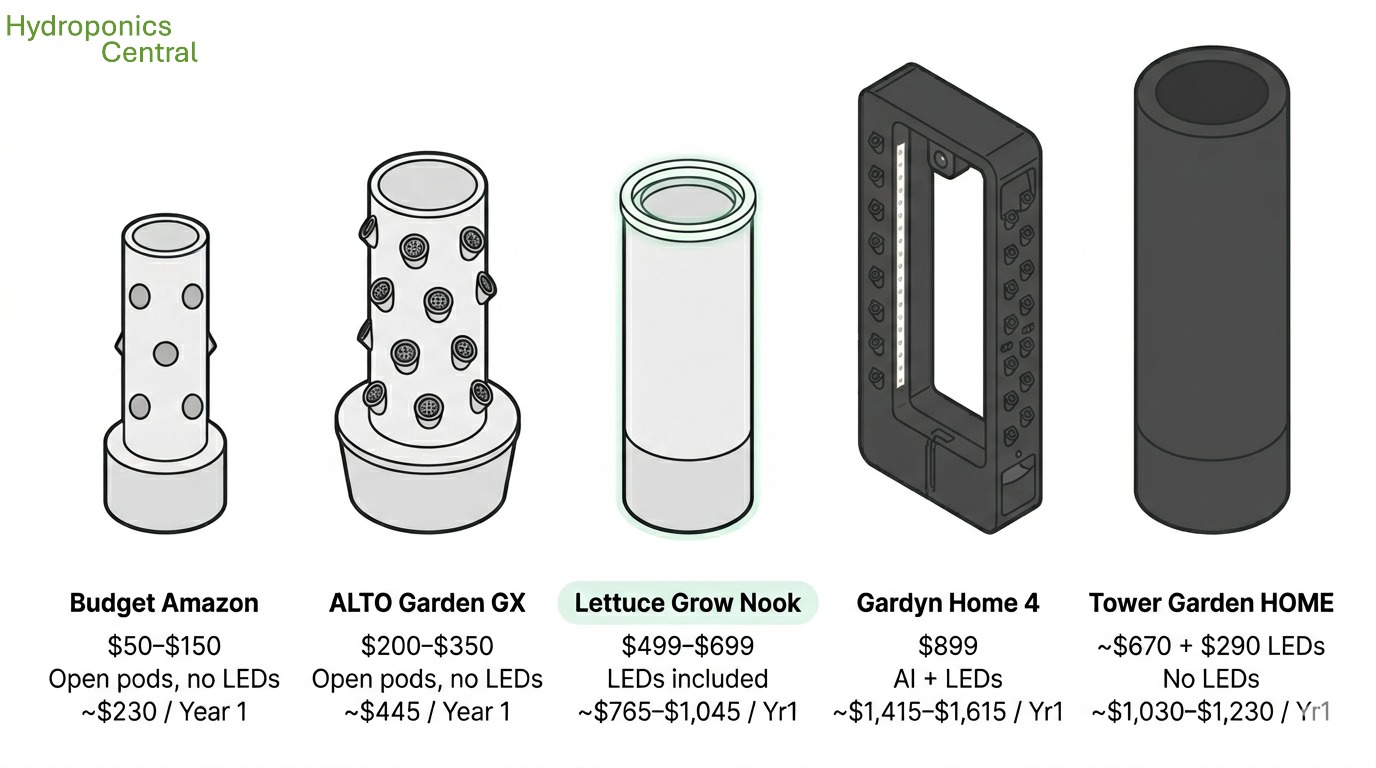
Quick comparison: all five picks
Prices verified May 2026. Confirm on brand websites before purchasing — costs vary by retailer and configuration.
The pattern that matters most: the Year 1 gap between open-system towers and proprietary ones. A budget Amazon tower at ~$230 Year 1 vs. Gardyn at ~$1,400–$1,600 Year 1 — both growing lettuce and basil. The premium buys design, convenience, and AI automation. That's worth it specifically if those factors are the reason you'd actually use the tower consistently — not for better crop output, because the plants don't know the difference.
What to skip — and why
Towers are the wrong choice if tomatoes or peppers are your primary goal — fruiting plants need root volumes that tower pod holes can't support at scale, and their canopy size makes tower spacing inefficient. You end up with one or two productive plants crowding out everything else. A 5-gallon DWC bucket from our DIY hydroponic garden guide handles tomatoes better: deeper root space, stronger aeration, no risk of a top-heavy plant destabilizing the tower.
The Lettuce Grow Farmstand (large version) is not a good first tower — at $700–$950 purchase price plus a separate ~$600 LED kit, it's the most expensive tower setup on the market with no advantage for beginners over the Nook. The Nook is the same company's smarter starting point.
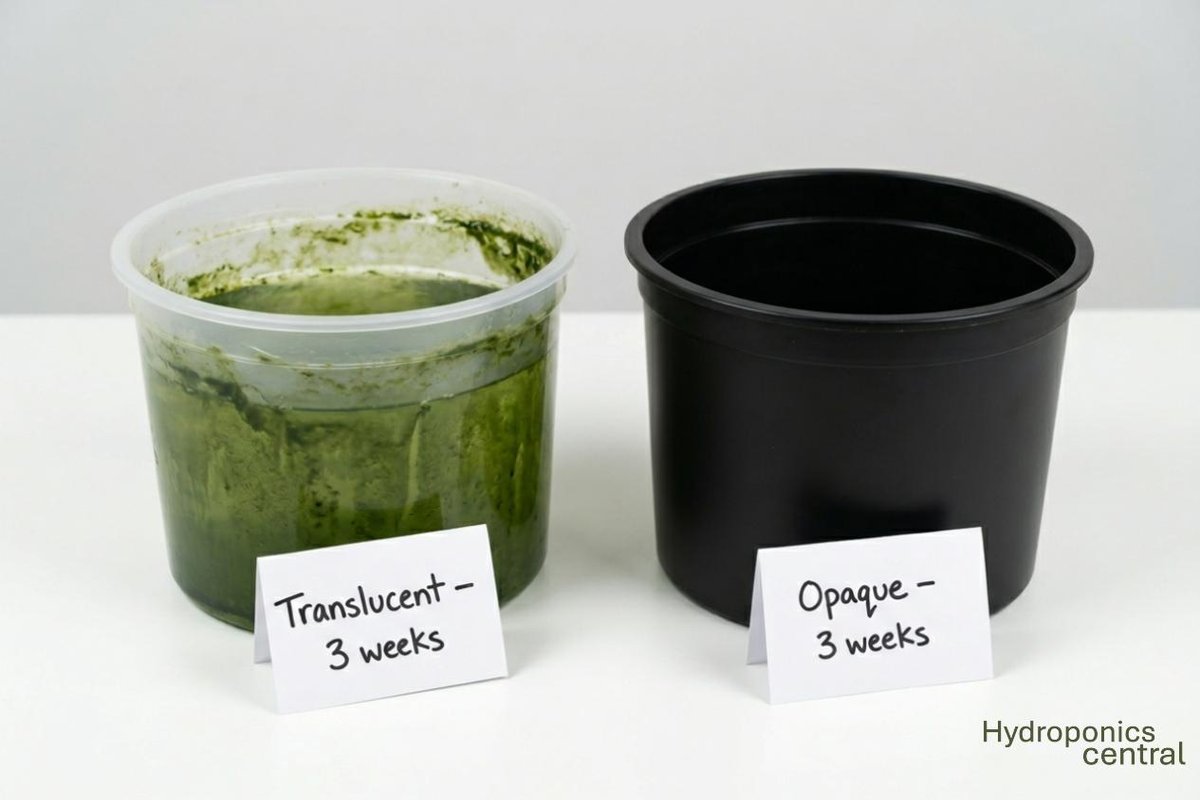
Any tower with a translucent reservoir will develop algae problems — light hitting nutrient solution grows green slime that blocks pump intakes and competes with your plants for nutrients. Several budget towers ship with clear plastic reservoirs. If yours does, wrap it in foil or opaque black plastic tape before first use.
If your goal is maximum plant density on a wall rather than a freestanding column, the hydroponic vertical garden guide covers five non-tower approaches — including the best vertical hydroponic system for wall-mounted density, a DIY NFT panel that undercuts even the cheapest tower on plant-per-dollar.
My take
If I were buying today, I'd go Lettuce Grow Nook — and the reason is visibility. Every Lettuce Grow community thread I came across had people still posting harvests 6–12 months in. I can't say the same for the budget options, which tend to disappear from people's feeds after the first grow cycle. A 3-foot tower in a kitchen corner gets tended because it's in your eyeline every day. The DWC tote in the spare room does not.
If I were starting from zero without knowing whether tower growing fits my routine, I'd buy a $50–$100 budget tower first. Three months of managing pH, watching a crop grow, and dealing with a clogged emitter will tell you more than any review about what you actually want — and which premium tower is worth spending it on.
The one thing worth saying directly: for herbs and leafy greens — the crops that thrive in every tower on this list — the $100 budget tower and the $900 Gardyn produce structurally identical results. The premium is real, but it's buying convenience and design, not better lettuce. Know what you're paying for.
For full cost tables, pump specs, reservoir sizes, and per-system crop compatibility, the hydroponic garden tower comparison has everything in one place.
Join 1,000+ growers getting one curated hydroponic tip every week — subscribe to the Hydroponics Central newsletter. Free, no spam.
Key Takeaways
Quick reference summary
- 1The Lettuce Grow Nook (~$499–$699, prices verified May 2026 — confirm on brand sites) is the best overall pick for most apartment growers: LEDs built in, 20 plants in 2 square feet, an ~8-gallon reservoir, and a semi-open pod system that lets you use your own seedlings — no forced subscription.
- 2Open-system towers (ALTO Garden GX, budget Amazon) [cost 3–5× less to own over 2 years](https://mistculture.com/gardyn-vs-lettuce-grow-review/) than proprietary pod systems like Gardyn — ongoing pod costs matter more than purchase price.
- 3Gardyn Home 4 totals $1,400–$1,600 in Year 1 once you include yCube pod costs — it's the right call only if plug-and-play automation is worth that cost to you every year.
- 4Budget Amazon towers ($50–$150) are the best first tower for beginners — not because they're the best towers, but because they teach you the nutrient cycle and plant spacing before you spend $500+ on a premium system.
- 5Tower Garden HOME is the only home tower that reliably grows squash, cauliflower, cherry tomatoes, and melons — its aeroponic design produces [20–30% more plant biomass](https://www.maxapress.com/article/doi/10.48130/tihort-0024-0002?viewType=HTML) than hydroponic systems, at the cost of being the least forgiving if the pump fails.
- 6Leafy greens and herbs — lettuce, basil, spinach, mint — thrive in every tower on this list. If those are your only crops, you're paying a premium for design and convenience, not crop performance.
Frequently Asked Questions
Common questions from our readers
Written by
Carl — Hydroponics CuratorI research hydroponics so you don't have to — going through university studies, extension programs, and grower communities to find what actually works for home growers.
I'm a content curator and researcher, not a licensed agronomist or commercial grower. Everything published here is sourced from credible third-party research, which is always linked inline. When in doubt, consult your local agricultural extension office. Learn more about how I research →
Found this helpful? Share it!