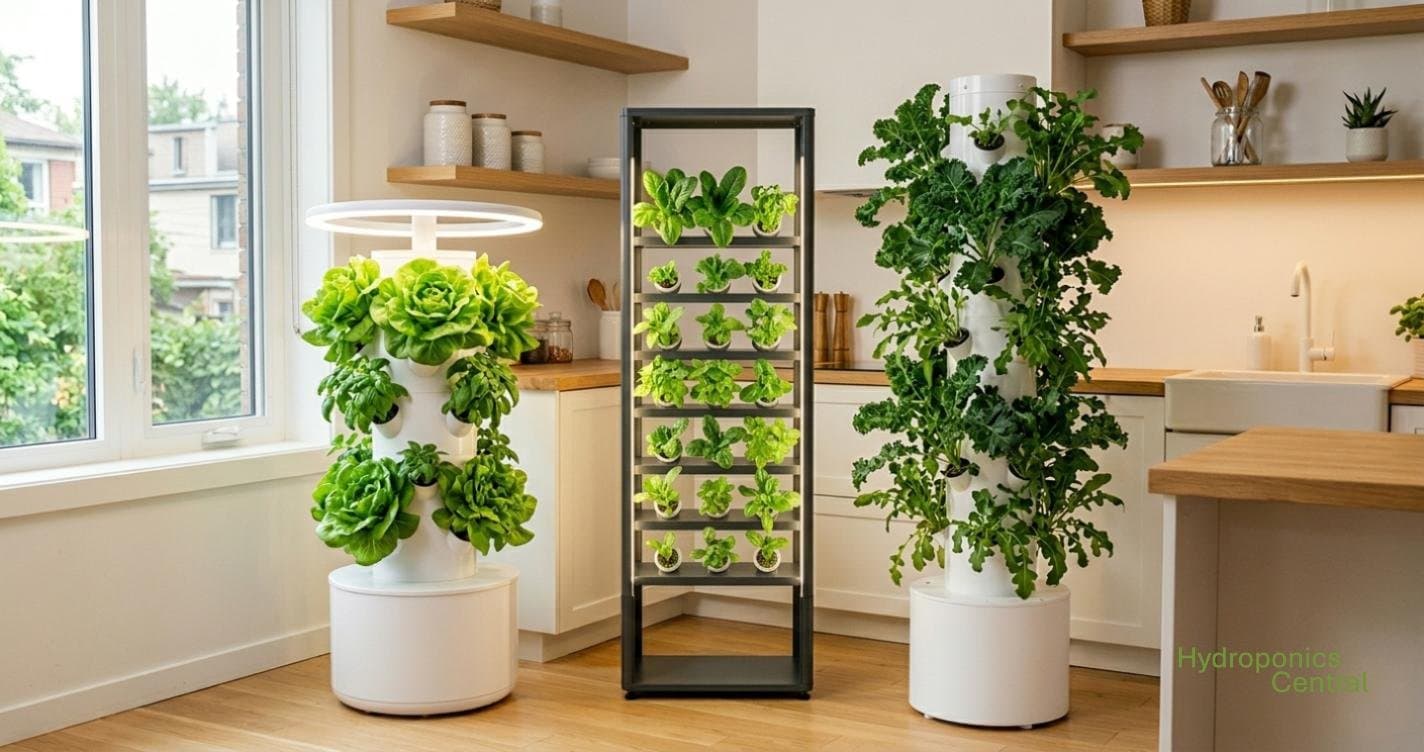
A hydroponic vertical garden grows plants in a stacked or wall-mounted configuration without soil, delivering nutrient solution directly to plant roots. The core benefit is space efficiency: a PMC study found vertical hydroponic systems produce 13.8× more yield per square meter of floor space than horizontal hydroponic setups. If you're working with a balcony, a spare wall, or a corner of a living room, vertical growing is how you turn that constraint into a productive garden.
I researched this because most guides either show you a $900 pre-built tower or a tangled DIY PVC build with no middle ground. There are actually five distinct system types that span $20 to $900 — and the right one depends on your space, your budget, and whether you want to build or buy.
I'm a content curator, not a licensed agronomist. Everything here is sourced from university research, USDA publications, and credible grower communities.
What Is a Hydroponic Vertical Garden?
A hydroponic vertical garden arranges plant sites vertically — stacked in a column, mounted on a wall, or layered in horizontal rails — so that nutrient solution reaches roots without soil and floor space stops being the limiting factor.
The UF/IFAS Extension puts the practical upside simply: a single tower or 2×3-foot wall panel supports 20–36 plants in the footprint a raised bed uses for 4–6. That ratio is why vertical hydroponic systems are the dominant choice for apartment balconies and small indoor spaces — not aesthetics, not novelty.
The 5 System Types — What Each One Is
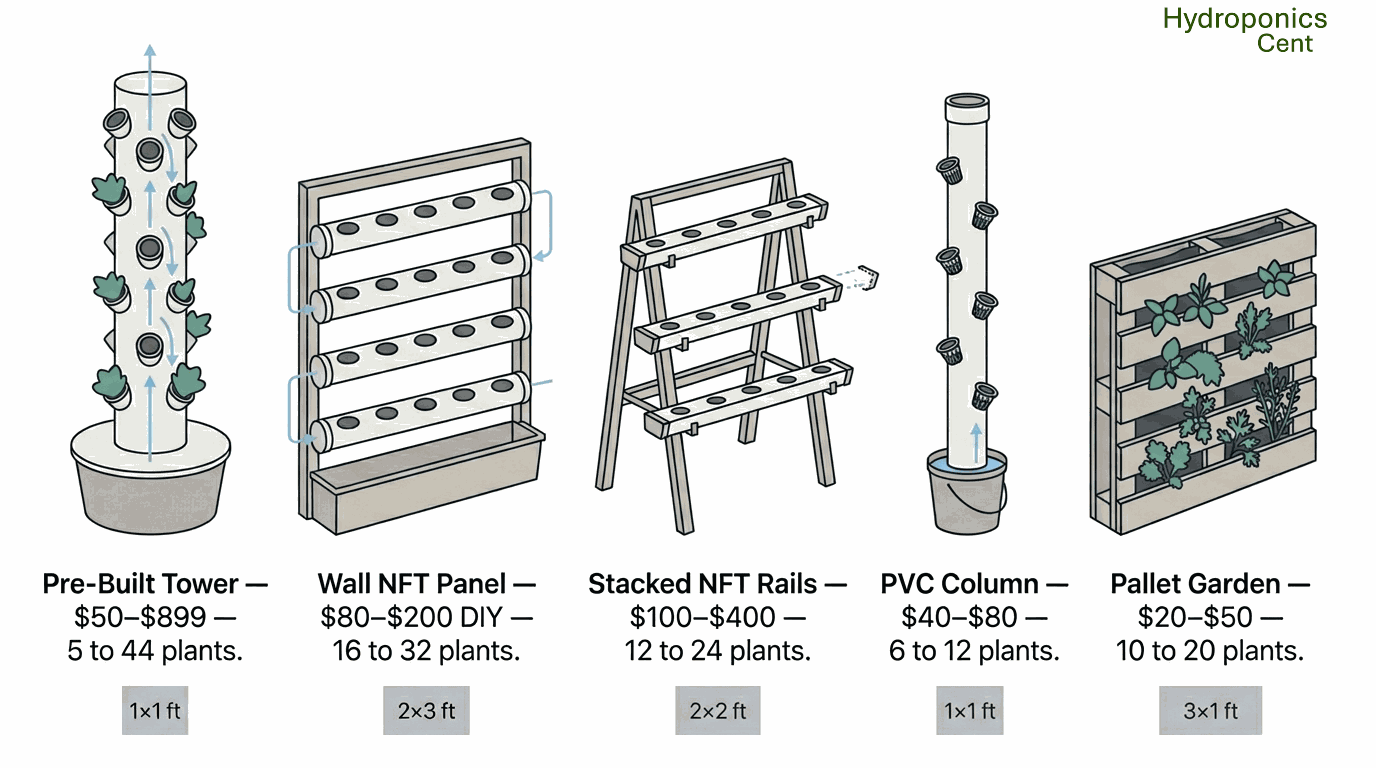
Pre-Built Tower Systems
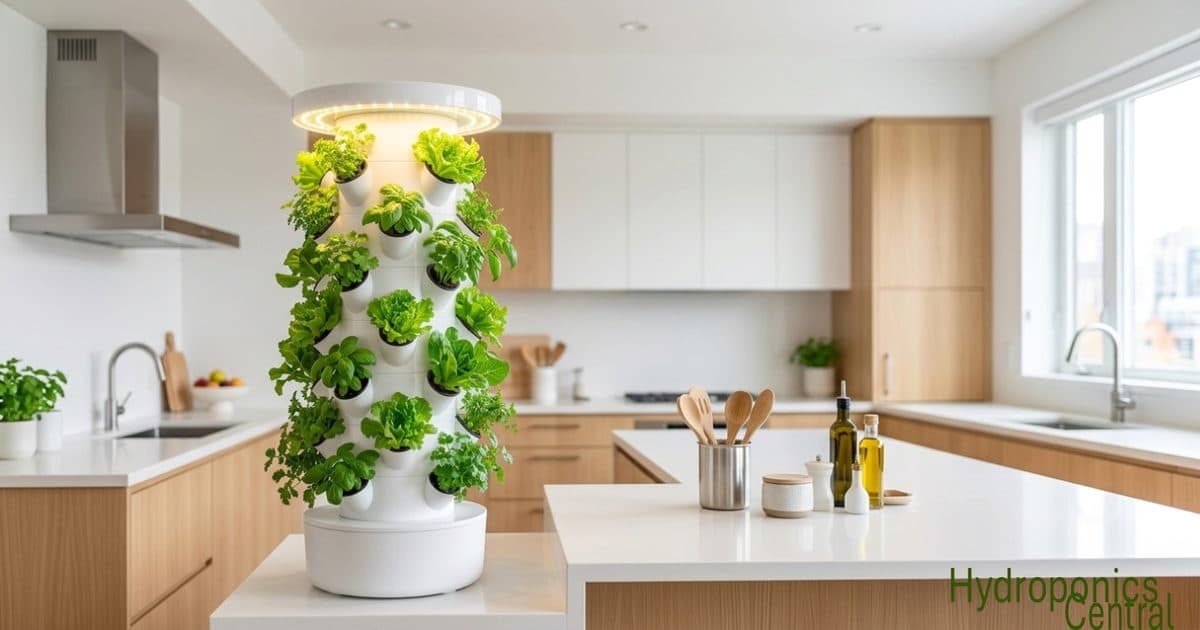
Pre-built towers (Lettuce Grow, Gardyn, Tower Garden, budget Amazon options) are the plug-and-play end of vertical growing. A pump circulates nutrient solution from a base reservoir up to the top, where it cascades down past each planting pocket.
Capacity ranges from 5 to 44 plant sites. Prices run from $50 (basic Amazon aeroponic towers) to ~$899 (Gardyn Home 4) — prices verified May 2026, confirm on brand sites before purchasing. The main split I kept coming back to in my research is proprietary vs. open: Gardyn and Tower Garden lock you into branded seed pods ($400–$600/year ongoing); the ALTO Garden and Lettuce Grow use standard net pots you fill yourself ($20/year in growing medium). That ongoing cost difference is the number that changes the decision for most beginners.
For a full breakdown of 7 specific pre-built towers with side-by-side costs, see the hydroponic garden tower comparison.
Wall-Mounted NFT Panels
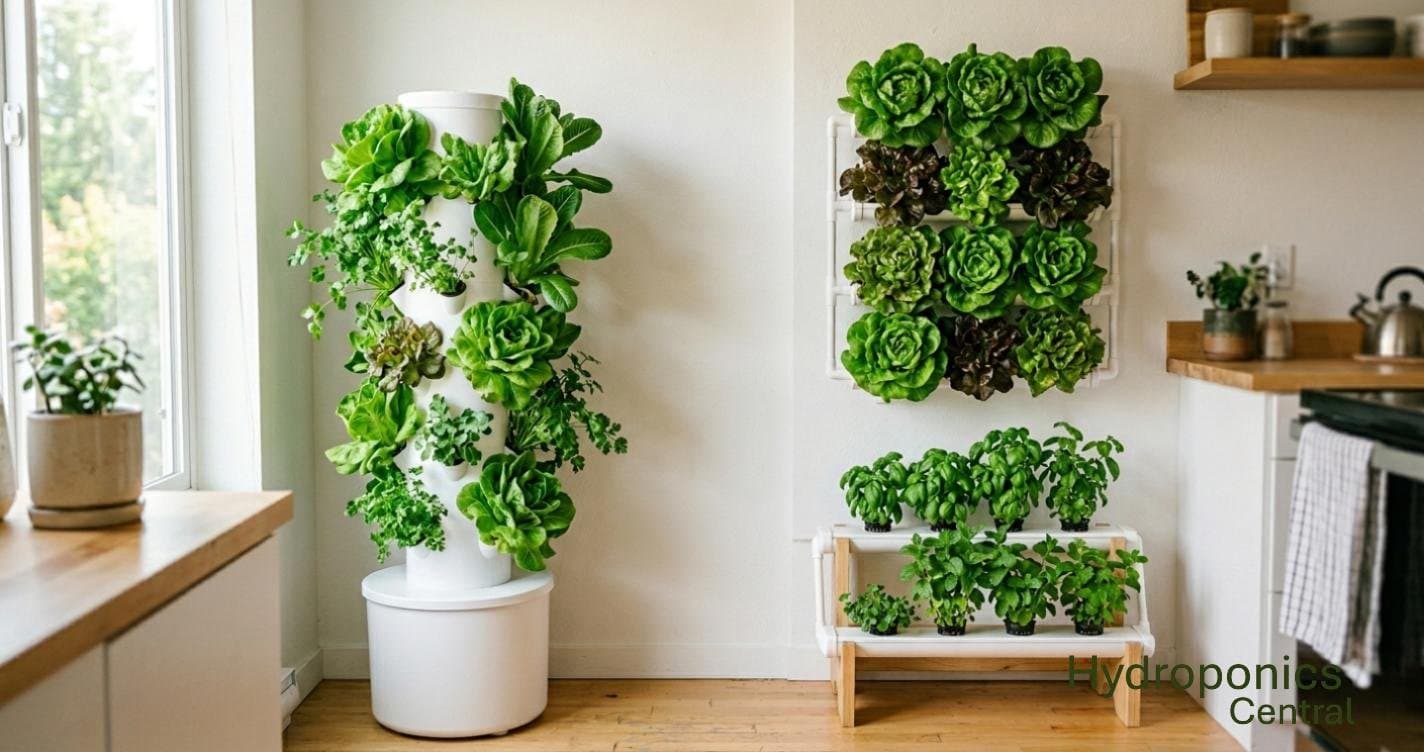
NFT (Nutrient Film Technique) panels mount flat against a wall, with a thin film of nutrient solution flowing continuously through horizontal channels. You can buy pre-made panels or build them from 2-inch PVC fence posts and basic plumbing fittings.
DIY wall NFT panels typically hold 16–32 plants in a 2×3-foot footprint and cost $80–$200 in materials (prices verified May 2026 — confirm at your local hardware store and Amazon before purchasing). Of all the DIY builds I reviewed, this one surprised me most — the density-to-cost ratio is better than any pre-built option once you're comfortable with basic plumbing.
Stacked NFT Rails
Two to four horizontal NFT channels stacked vertically on a frame, fed from a single reservoir. Less dense than a wall panel, easier to service — you can pull a single rail to transplant or harvest without disturbing the others.
Stacked NFT rail kits (CropKing and similar suppliers) run $150–$400; DIY versions built from PVC channel and standard pipe fittings cost $100–$150 (prices verified May 2026 — confirm with suppliers before purchasing). The real advantage over a wall panel: you can pull one rail out entirely to transplant or harvest without touching the rest of the system — useful when you're growing different crops at different harvest stages.
PVC Pipe Columns
The classic DIY vertical approach: 4-inch PVC pipe with 2-inch holes drilled every 6 inches, mounted vertically. Nutrient solution pumps up from a bucket reservoir to the top and flows down through the column past plant roots in net cups.
Total cost: $40–$80 in materials from Home Depot (verify current prices before purchasing). Oklahoma State University Extension publishes a free step-by-step build guide for exactly this type of column — it's the most credible free resource I found for this build. The trade-off is real: water distribution is uneven unless you add a drip emitter at each hole. The OSU guide recommends an 80–120 GPH pump for a standard 5-foot column; most beginners buy too powerful a pump and then wonder why the top plants are drowning.
Pallet Gardens
A wooden pallet lined with landscape fabric, stood upright, and packed with growing medium. The cheapest entry point: free or $5–$20 for the pallet, plus fabric and nutrient solution.
Pallet gardens work best outdoors with passive-watering setups (hand-watering or a drip line from a raised reservoir). The trade-off is nutrient control: without a pump and reservoir, EC and pH are harder to maintain consistently — which is why this system suits herbs and fast greens, not anything with a longer growing window.
Comparison Table
Each system below is a viable choice — the right one is determined by whether you want to build or buy, how many plants you want, and whether you're indoors or out. The table names a winner for each use case; the sections above explain the reasoning.
Prices verified May 2026. Confirm with retailers before purchasing — costs vary by supplier and configuration.
What the Research Says About Yield
Vertical hydroponic systems produce 13.8× more yield per square meter of floor space than horizontal setups, according to a PMC study comparing both configurations directly. A separate meta-analysis of lettuce crops found average vertical farming yields of 7.1 kg per square meter per cycle — 2.4× higher than horizontal hydroponic production at 3.0 kg/m².
For home growers, the practical takeaway is not that you'll grow 13× more food — it's that you can grow a meaningful amount of food in a space that would otherwise produce nothing. A tower or wall panel in a 1–2 square foot corner can realistically yield enough lettuce and herbs for weekly salads.
On water: a PMC analysis of hydroponic vs. conventional agriculture found hydroponic systems use up to 95% less water for the same crop. Vertical systems amplify this because the reservoir is compact and the closed-loop circulation leaves almost nothing to evaporate.
The honest caveat — which both PMC studies acknowledge — is that these figures come from optimized controlled environments, not a beginner's first tower. A more realistic expectation for a home setup is 2–3× the yield of a horizontal system, not 13×. That's still a compelling reason to grow up instead of out.
What to Grow — and What to Skip
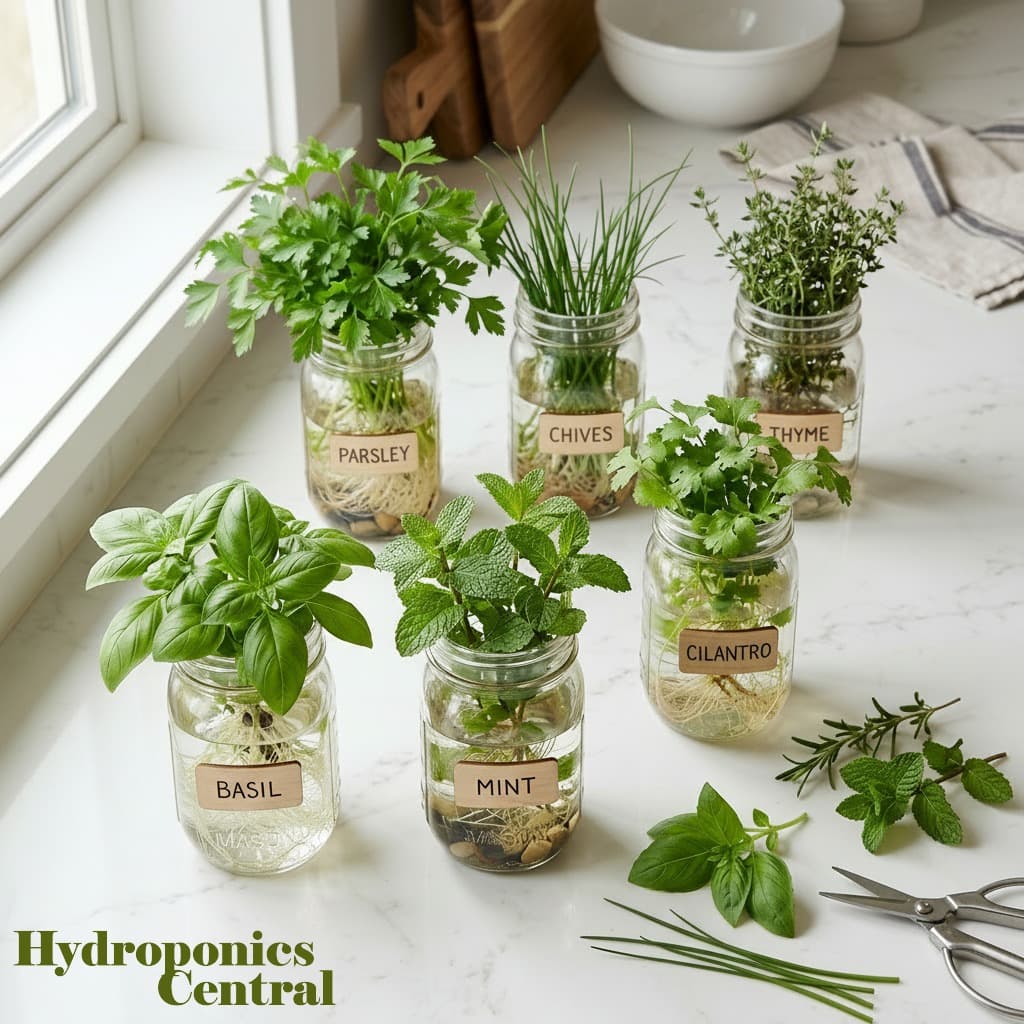
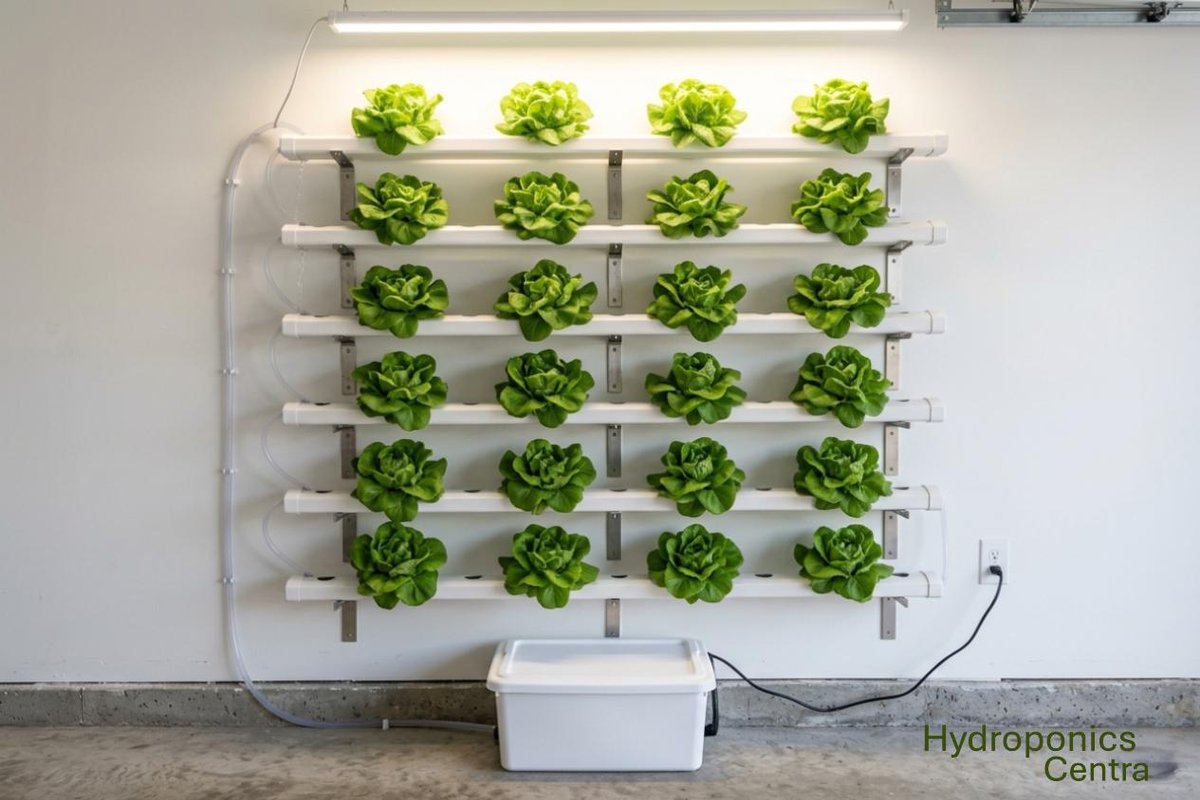
Grow these: Lettuce (harvest in 3–4 weeks), basil (4–6 weeks), spinach (3–5 weeks), kale (5–7 weeks), mint, cilantro, arugula, and Swiss chard — harvest timing per UF/IFAS Extension. These crops stay compact, need shallow root space, and produce continuously if you harvest the outer leaves rather than pulling the whole plant.
Strawberries work in towers with larger 3-inch pockets — they need more root volume than herbs but less than any fruiting vegetable.
Skip these: Tomatoes, peppers, cucumbers, and zucchini. These need root volumes that most vertical systems can't support, and their canopy size makes the spacing in any tower inefficient. If you want to grow tomatoes hydroponically, a 5-gallon DWC bucket is a better tool — see the DIY hydroponic garden builds for how to set one up.
Troubleshooting — The 3 Most Common Vertical Garden Problems
Uneven watering is the most common failure in DIY vertical hydroponic builds — top plants receive too much nutrient solution while bottom plants dry out from an undersized or overpowered pump. The fix is adding a drip emitter at each planting hole rather than relying on passive overflow. Pump flow rate also matters — most 4-inch PVC column builds need 80–120 GPH; most beginners buy a pump that's too powerful.
Root blockage slows nutrient flow in active vertical tower systems when roots from upper plants grow down and clog the interior column. Monthly inspection and trimming root tips back to the net cup prevents full blockages. Fast-growing crops like basil are the worst offenders.
Nutrient burn on lower plants is a common issue in tall gravity-fed vertical systems — nutrient solution concentrates as it flows down past each plant, raising the EC at the bottom measurably above the top. Keep tower height under 5 feet and check EC at the reservoir (not just the top) every few days until you understand your specific system's behavior.
My Take
Vertical hydroponic gardening is the right tool for one specific problem: you want to grow fresh food but you don't have horizontal space to spare. If that describes you — apartment balcony, spare wall, narrow patio strip — a vertical system genuinely delivers.
My honest recommendation for most beginners: start with a pre-built tower at the $50–$200 range before building anything. The OSU PVC column build is legitimate and inexpensive, but uneven water distribution punishes beginners who don't get the pump sizing right on the first try. A cheap pre-built tower teaches you how the nutrient cycle and plant spacing work before you commit to a custom build. Once you understand what your crops actually need, you can build exactly the wall NFT panel or stacked rail system that fits your space — and it'll work because you know what you're doing.
The one thing that surprised me in the research: the 13.8× yield figure isn't a marketing claim — it comes from a peer-reviewed PMC study comparing real hydroponic systems side by side. I expected a more modest gap. Even accounting for the fact that beginner setups won't hit that ceiling, the underlying principle holds: the same floor space produces dramatically more food when you use it vertically.
Join 1,000+ growers getting one curated hydroponic tip every week — subscribe to the Hydroponics Central newsletter. Free, no spam.
Key Takeaways
Quick reference summary
- 1Vertical hydroponic systems produce [13.8× more yield per square meter](https://pmc.ncbi.nlm.nih.gov/articles/PMC5001193/) than horizontal setups — the same floor footprint grows dramatically more food when you grow up instead of out.
- 2Five main system types cover every budget: pre-built towers ($50–$899), wall-mounted NFT panels (~$80–$200 DIY), stacked NFT rails (~$100–$400 kit / ~$100–$150 DIY), PVC pipe columns (~$40–$80), and pallet gardens (~$20–$50). Prices verified May 2026 — confirm on retailer sites before purchasing.
- 3Leafy greens and herbs — lettuce, basil, spinach, kale, mint — are the correct crops for any vertical system. They harvest in 3–6 weeks and fit in any tower depth.
- 4Fruiting crops (tomatoes, peppers, cucumbers) are a poor fit for most vertical systems — root volume and canopy size make them better suited to a 5-gallon DWC bucket.
- 5Hydroponic systems use [up to 95% less water](https://pmc.ncbi.nlm.nih.gov/articles/PMC4483736/) than soil growing — vertical hydroponic setups amplify this by keeping the reservoir compact and minimizing evaporation.
- 6The most common beginner failure in vertical systems is uneven water distribution — top plants drown while bottom plants dry out. A correctly sized pump and proper emitter spacing fixes this before it starts.
Frequently Asked Questions
Common questions from our readers
Written by
Carl — Hydroponics CuratorI research hydroponics so you don't have to — going through university studies, extension programs, and grower communities to find what actually works for home growers.
I'm a content curator and researcher, not a licensed agronomist or commercial grower. Everything published here is sourced from credible third-party research, which is always linked inline. When in doubt, consult your local agricultural extension office. Learn more about how I research →
Found this helpful? Share it!