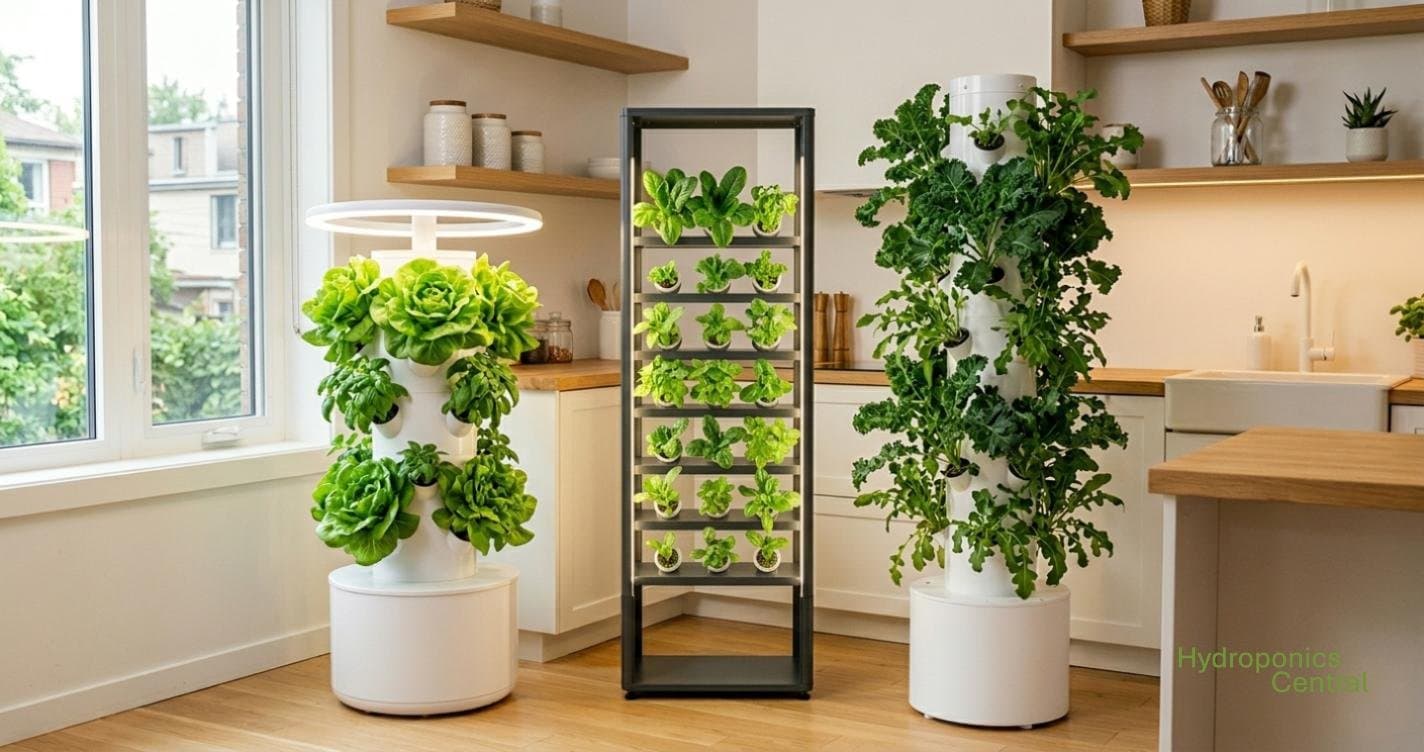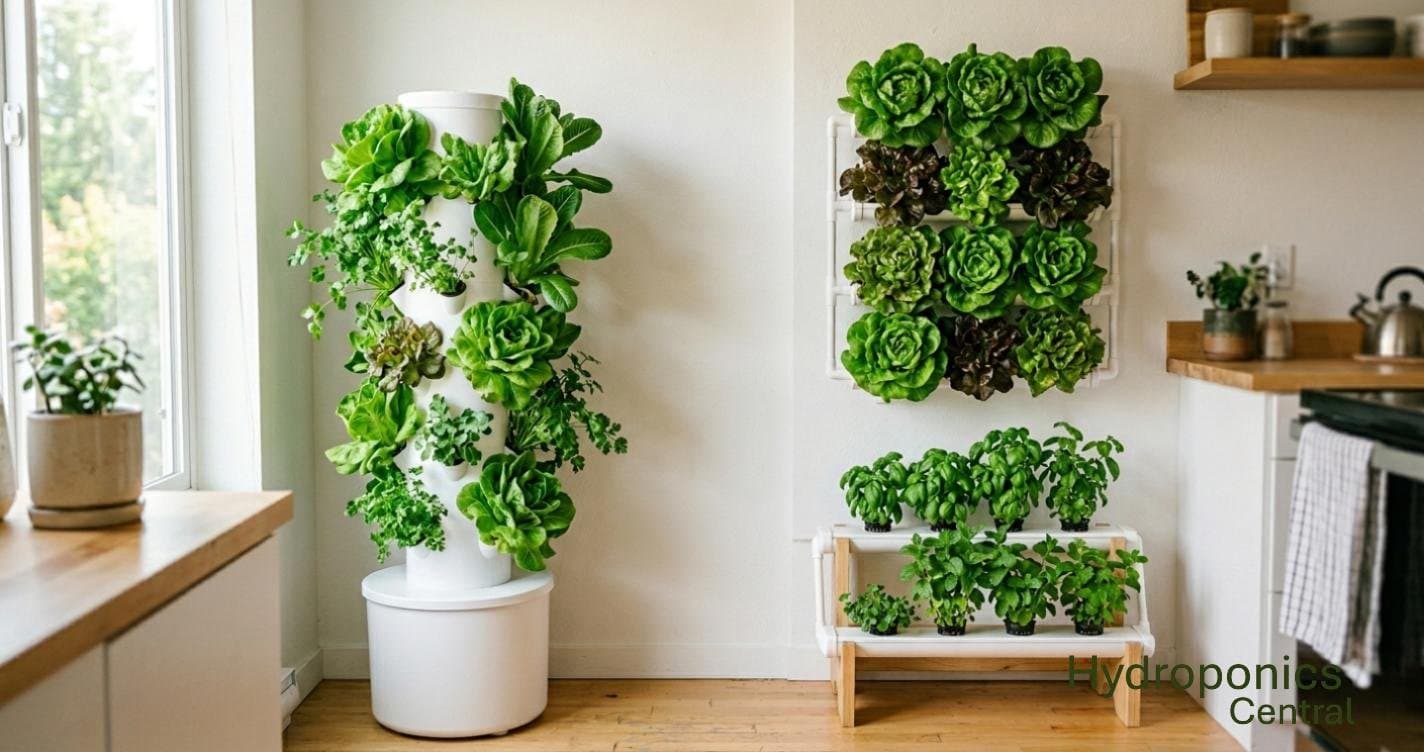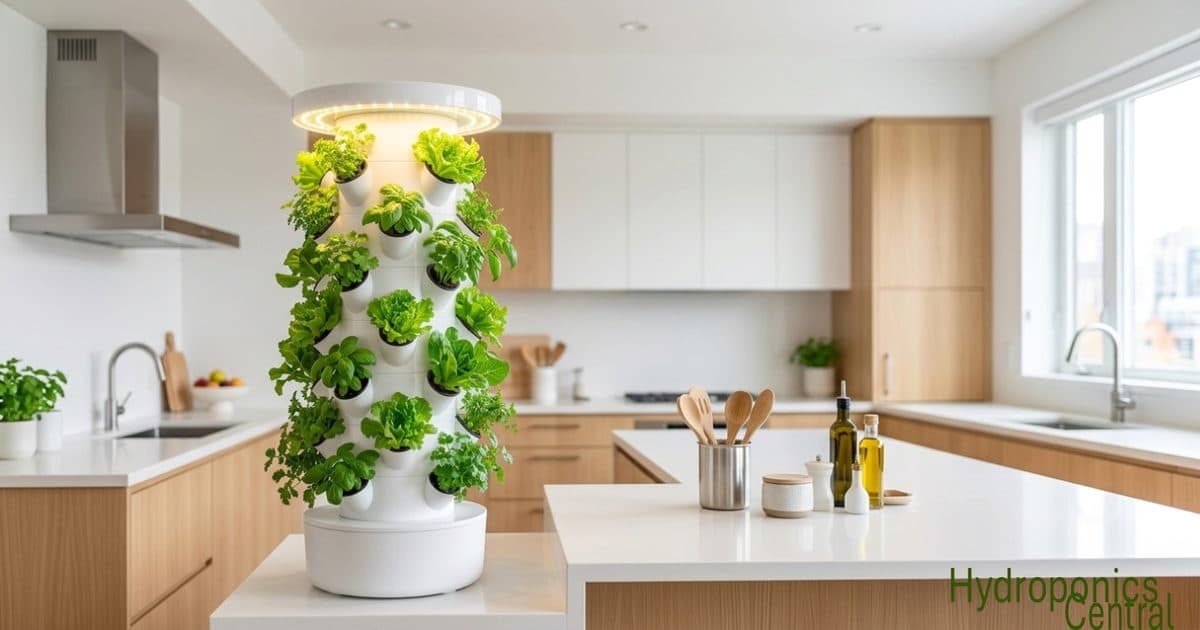
A hydroponic garden tower is a vertical growing system that stacks 20–80 plants in as little as 2 square feet of floor space. It delivers nutrients directly to roots through either aeroponic misting or hydroponic drip circulation — no soil needed. Purchase prices range from around $50 to $899, but Year 1 total costs (pods, lights, electricity) range from $230 to over $1,600 depending on the system you choose.
I'm a content curator, not a licensed agronomist — I research and synthesize from credible sources so you don't have to. Most tower reviews compare two or three brands without showing the real ongoing costs, or they list ten products with no useful analysis. I researched every major tower system on the market, pulled verified prices from brand websites, Amazon, and Costco, and built the comparison I couldn't find anywhere else.
This guide covers 7 tower systems across 9 metrics, breaks down Year 1 vs. Year 2 total costs, and gives you an honest framework for whether a tower is actually the right system for you. Prices were verified in April 2026 and will change — always confirm on the brand's website before buying. If you're new to hydroponics, start with our indoor hydroponic garden guide for the full system overview first.
How a hydroponic garden tower actually works
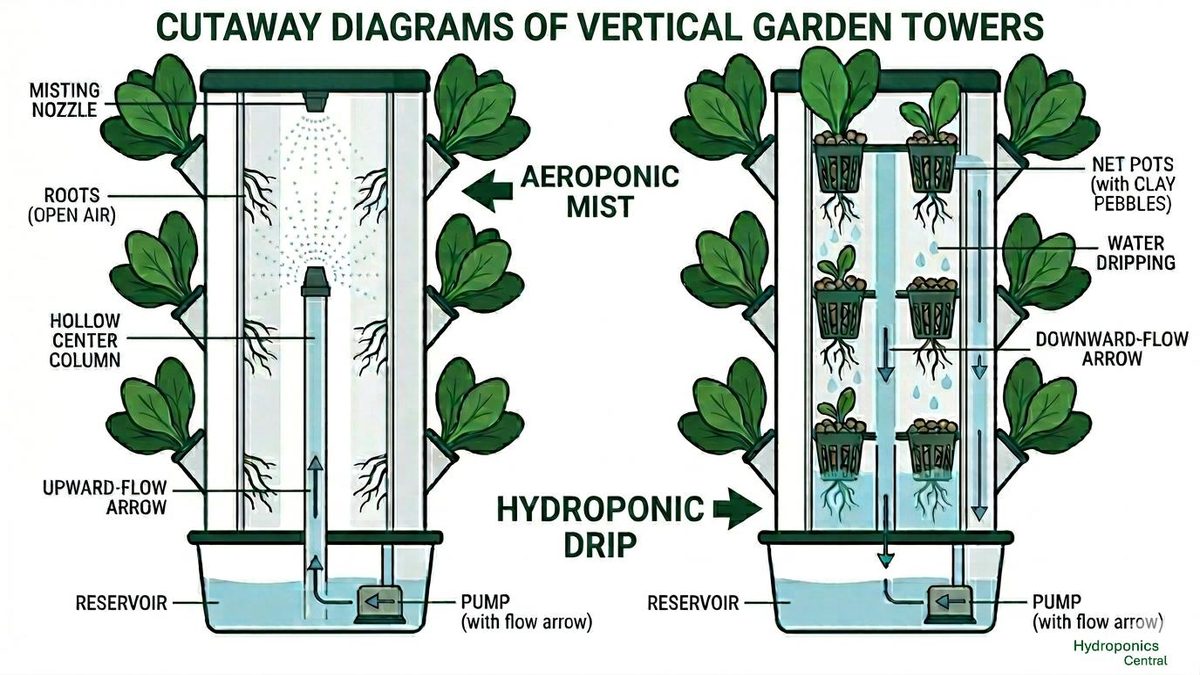
A hydroponic garden tower works by pumping nutrient solution from a base reservoir up through the vertical column. At the top, the solution either mists roots hanging in open air (aeroponic) or drips over roots in small growing pods (hydroponic). It flows down through all the plant positions, drains back into the reservoir, and the cycle repeats on a timer.
That's the basic mechanism — but the difference between aeroponic and hydroponic matters a lot for how forgiving the system is and what you can grow.
Aeroponic towers — used by Tower Garden and some DIY PVC builds — suspend plant roots in open air inside the tower column. A submersible pump pushes nutrient solution from the reservoir at the base up to the top. From there, it mists or cascades down over the exposed roots. Roots get maximum oxygen, which drives faster growth. The risk: if the pump fails, roots have no moisture to fall back on. They can dry out within hours. Aeroponics is the most efficient delivery method — and the least forgiving.
Hydroponic towers — used by Lettuce Grow, Gardyn, ALTO Garden, and most budget Amazon towers — seat plants in net pots with a small amount of growing medium (rockwool or clay pebbles). Nutrient solution floods or drips over the roots on a timer. The growing medium holds moisture, so a brief pump failure won't immediately kill your plants. This makes hydroponic towers much more beginner-friendly.
Every tower needs three things to run well. First, a reservoir large enough to avoid daily top-ups — Gardyn's 6-gallon tank needs filling about twice as often as Lettuce Grow's 19-gallon version. Second, LED grow lights for any indoor setup (12–16 hours daily). Third, regular pH checks to keep the nutrient solution between 5.5 and 6.5.
Most tap water is fine after sitting out 24 hours to let the chlorine escape. If your water is very hard (above 200 ppm) or treated with chloramine instead of regular chlorine, use filtered water — aeroponic towers are especially sensitive to mineral build-up. According to the University of Minnesota Extension, pH management is the single most important factor in any hydroponic system's success.
What the research actually says about tower growing
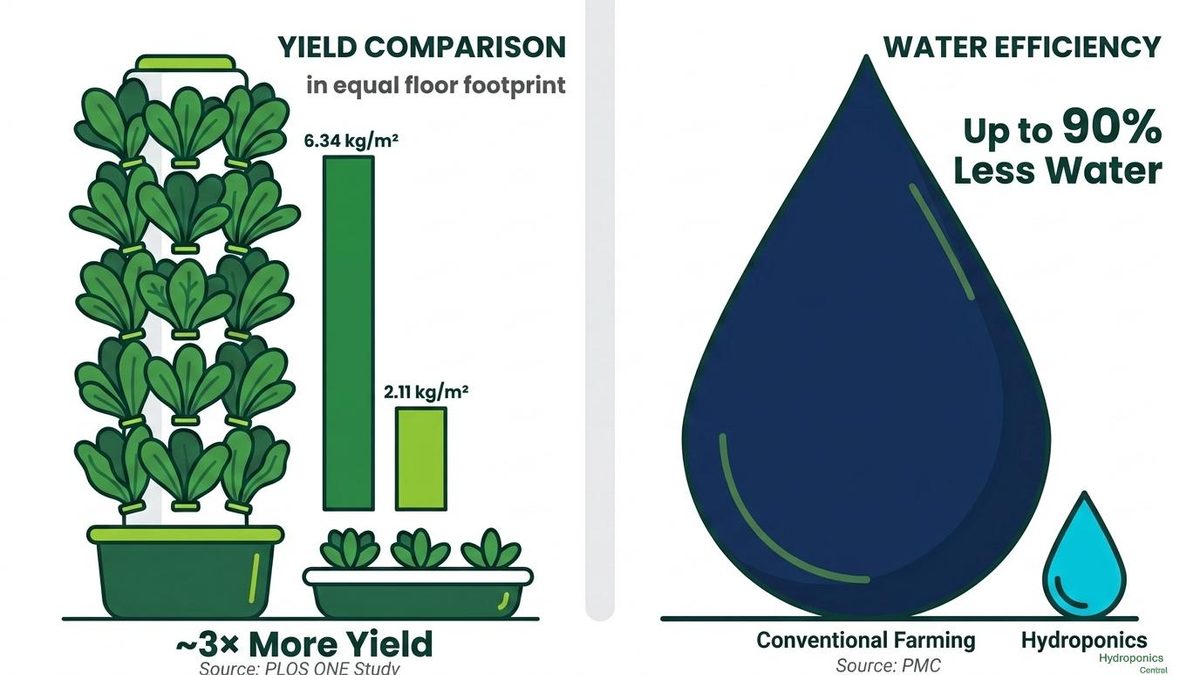
Hydroponic tower gardens produce about 3× more lettuce per square meter than horizontal hydroponics and use up to 90% less water than conventional soil farming — advantages confirmed across multiple peer-reviewed studies. The honest caveat: those figures are from controlled commercial settings — not apartments.
A peer-reviewed study in PLOS ONE measured this directly. Vertical farming yielded 6.34 kg of lettuce per square meter versus 2.11 kg for horizontal hydroponics — nearly 3 times the output from the same floor footprint. That's the real argument for towers: not magic, just using vertical space that would otherwise sit empty.
On growing method differences: a 2024 study in Technology in Horticulture compared aeroponic and hydroponic systems directly. It found that aeroponic systems produce 20–30% more plant biomass than NFT and DWC hydroponic systems, with greater water savings too. That's the data behind Tower Garden's premium pricing — faster growth is a real and documented advantage.
For water efficiency, hydroponics uses up to 90% less water than conventional agriculture. For a home grower running a closed reservoir, this means minimal waste and simple weekly top-ups rather than daily watering.
The honest limits: all of these figures assume well-managed systems in controlled conditions. At home, your results depend on how well you manage light, pH, and nutrients. The science tells you what's possible when everything is dialed in — not what a beginner will hit in month one.
7 hydroponic garden towers compared (2026 prices)
The 7 main hydroponic garden tower systems in 2026 range from ~$50 (budget Amazon) to ~$899 (Gardyn Home 4). The biggest differences between them are whether pods are open or brand-locked, whether LEDs are included in the price, and whether you get smart app control. All prices are April 2026 — verify on brand websites before buying.
Tower Garden HOME is the only home tower that uses true aeroponic misting. It's the sole system on this list that reliably grows large plants like squash, cauliflower, and melons. The indoor LED kit is a ~$290 add-on, pushing a fully indoor-ready setup past $960. Tower Garden is sold through Juice Plus — a multi-level marketing model where you buy through a consultant, not a retail store. The product itself is well-regarded, but the sales channel is worth knowing upfront. Stands about 5 feet tall. Setup: 30–60 minutes. Pump noise: moderate.
Lettuce Grow Farmstand was named the best overall indoor hydroponic garden by independent testing at CNN Underscored in 2026. The 19-gallon reservoir — the largest of any home tower — means fewer refills. Its modular design lets you start at 12 plants and expand to 36 over time. You can use pre-sprouted seedlings ($3 each) or start your own from seed, making it the most flexible premium system. Stands over 5 feet tall at 36 pods. Setup: 30–60 minutes. Pump noise: low — quieter than a desktop fan. One known issue: the Glow Ring grow lights (~$600) have accumulated reports of electrical failure in the Lettuce Grow community — check recent reviews before buying the light kit.
Lettuce Grow Nook is the Farmstand's apartment-focused sibling — 20 plants in 2 square feet with LEDs included in the price. Currently ~$499 at Costco and ~$699 on the Lettuce Grow website. At roughly 3 feet tall, it fits on a countertop or in a corner without dominating the room. Setup: under 20 minutes. Pump noise: minimal. The all-in-one pricing is its main strength — you're not faced with a separate $300–$600 lighting purchase after checkout.
Gardyn Home 4 is the most advanced tower on this list at ~$899. The AI assistant Kelby monitors plants via camera, adjusts watering schedules, sends harvest reminders, and records timelapse footage. For beginners who don't want to manage pH and nutrient timing manually, Kelby's automation is genuinely valuable. The trade-off is total lock-in. Gardyn's proprietary yCube pods can only be ordered from the brand at $3–5 each. Replace all 30 pods every 2–3 months and you're spending $400–$600 per year on pods alone — more than it costs to build and run a DWC system for two full years. The 6-gallon reservoir needs topping up roughly twice as often as Lettuce Grow's 19-gallon version. Stands about 5 feet tall. Setup: ~15 minutes, genuinely plug-and-play. Some users report a noticeable pump hum in quiet rooms.
Gardyn Studio 2 (~$549) is Gardyn's compact option — 16 plants, same Kelby AI, at about 2 feet tall. Genuinely countertop-sized. The 16-pod capacity covers a steady supply of salad greens and herbs for one or two people. Same yCube pod costs apply — the smaller pod count helps, but you're still locked into Gardyn's supply chain. Setup: ~15 minutes. Pump noise similar to the Home 4.
ALTO Garden GX is the right choice for growers who refuse proprietary lock-in. Standard net pots take any seed, any growing medium — no subscriptions, no pod orders. The tower body is built from food-grade plastic with 2mm walls, thicker than most budget competitors. Base price is ~$200–$350 without lights (suited for outdoor use or growers who already own LED panels). The lights bundle adds roughly $300 for a total of ~$650. No app, no smart features, which means more manual work — but complete freedom. Setup: 30–45 minutes. Pump noise: low.
Budget Amazon towers (VEVOR, BAOSHISHAN, and others) cost $50–$150 with 20–80 pod positions. Build quality varies — buyer reviews flag flimsy construction and crimped pump hoses. Setup takes 1–2 hours and instructions are often poorly translated. Pump noise ranges from quiet to genuinely loud — check the specific model's reviews before buying. The upside: open net pots, any seed, minimal ongoing costs. A smart way to test whether vertical tower growing fits your routine before committing to a premium system.
The real cost of owning a hydroponic garden tower (Year 1 vs. Year 2)
The purchase price is only the entry fee. Year 1 total costs range from about $230 (budget Amazon) to over $1,600 (Gardyn Home 4) — once you add pods, nutrients, electricity, and maintenance. Here's the full breakdown across all 7 systems.
The pattern is clear: open-system towers cost 3–5× less to own over 2 years than proprietary ones. The Gardyn Home 4's AI convenience is real — but the price isn't $899. It's $1,400–$1,600 in Year 1, and $500–$700 every year after that. The Lettuce Grow Nook sits in a useful middle ground: semi-open (you can use your own seedlings), moderate ongoing costs, and LEDs included.
Methodology: Electricity estimates assume a 25–45W pump running 24/7 and LED grow lights (20–60W) running 14 hours/day at the US average of $0.16/kWh. Pod costs assume replacing all pod positions twice per year for proprietary systems. Repair costs are based on 3-year cost tracking data. All purchase prices are April 2026 — verify before buying.
For context: a DWC storage tote from our DIY hydroponic garden guide costs ~$100 to build and under $100/year to maintain, growing 12 plants for roughly 1/10th the Year 1 cost of a premium tower.
What you can actually grow in a hydroponic garden tower
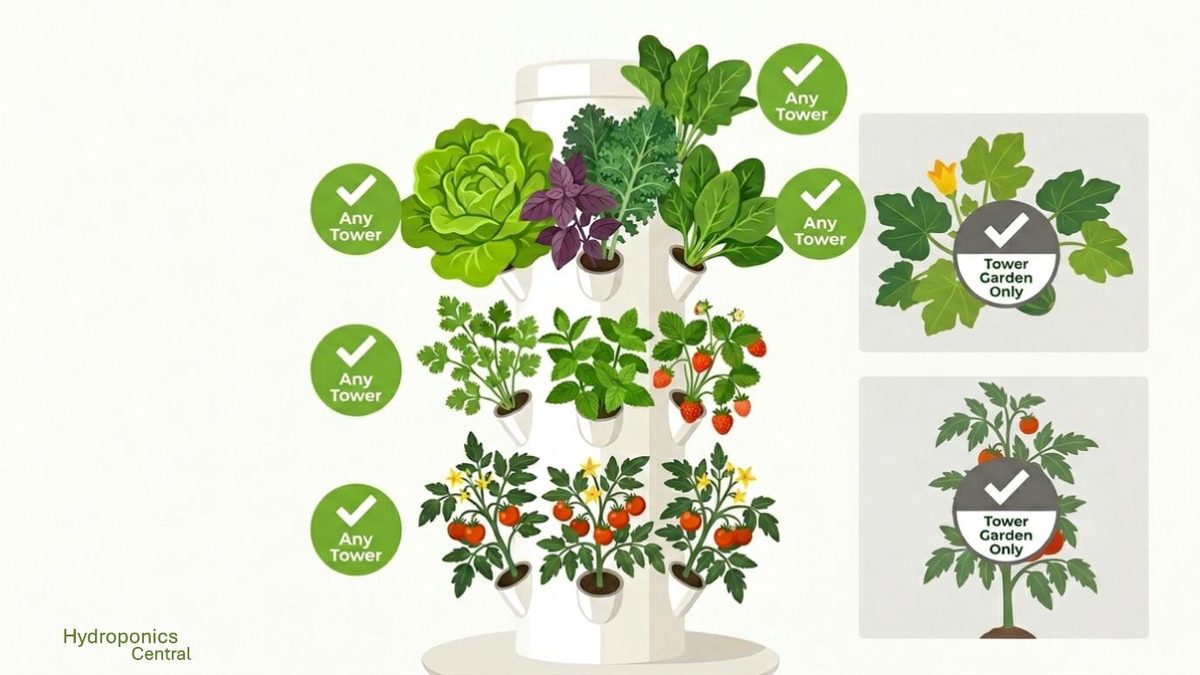
Every hydroponic tower grows lettuce, herbs, and leafy greens reliably — the differences only matter if you plan to grow fruiting crops or large plants.
If your goal is herbs and leafy greens, any tower works — including the $50–$100 budget option. You're paying the premium for convenience and design, not for better crop performance. The only tower that justifies its price on crops alone is Tower Garden HOME — the sole system that handles squash, cauliflower, and melons.
A note on strawberries: they grow in most towers but yields are inconsistent. Pod holes aren't angled for the plant's natural downward-draping habit, and indoor pollination requires manual help without wind or insects. If strawberries are your main goal, a horizontal NFT system will serve you better.
For herb-specific data — pH targets, EC ranges, harvest timing by variety — see our hydroponic herb garden guide. For large fruiting plants like tomatoes and peppers, a 5-gallon DWC bucket from our DIY hydroponic garden guide is often the better choice — deeper root space, stronger aeration, and a fraction of any tower's cost.
Should you buy a tower — or build a simpler system?
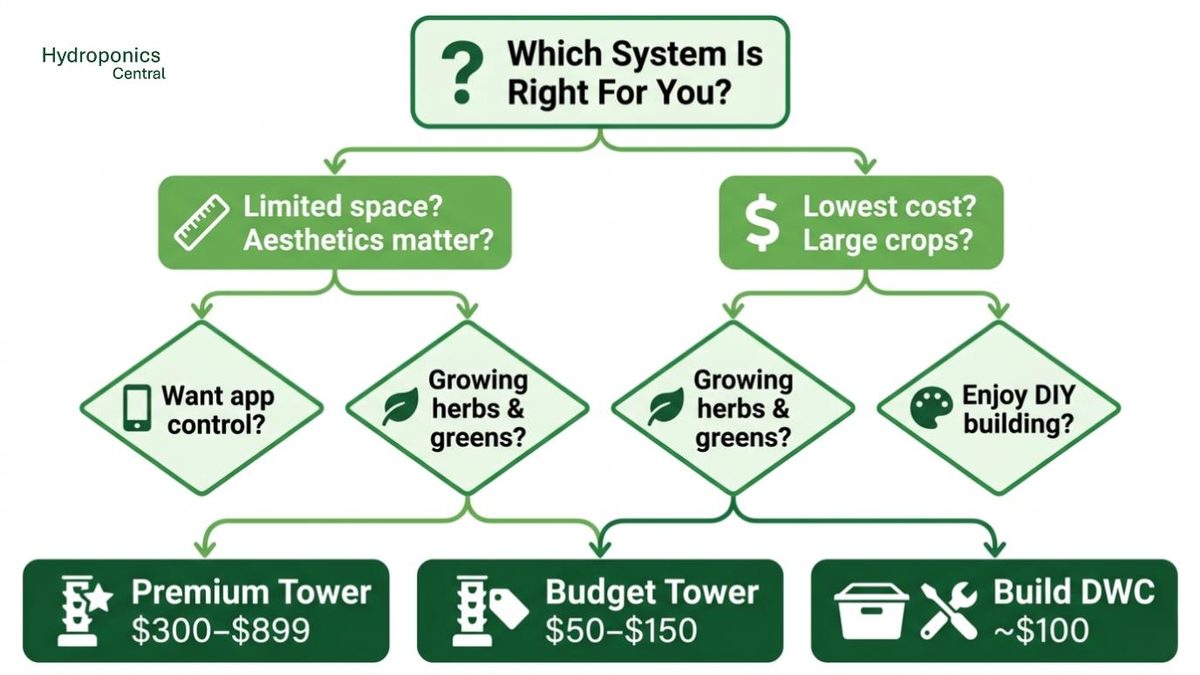
A tower is worth buying if vertical space efficiency and design are your top priorities — towers are the best option for growing 20+ plants in under 2 square feet. They're not the right call if cost or large fruiting crops are your main goal; a DWC system does both for far less money.
Most guides skip this question and assume you've already decided. Here's a clear framework to help you choose.
Buy a premium tower ($300–$899) if:
- You have limited floor space and need a vertical hydroponic garden — 20+ plants in 2 sq ft
- Aesthetics matter — you want something that looks good in your living space, not a utility setup
- You want app-guided growing with minimal manual work (Gardyn's Kelby handles pH and watering)
- You're growing herbs and leafy greens, the crops towers do best
- You're comfortable paying ongoing pod and electricity costs for the convenience
Buy a budget tower ($50–$150) if:
- You want the vertical form factor without the premium price
- You're comfortable with basic troubleshooting and don't need app support
- You want open net pots with no proprietary lock-in
- You're testing whether tower growing fits your routine before committing more money
Build a DWC tote or Kratky jars instead if:
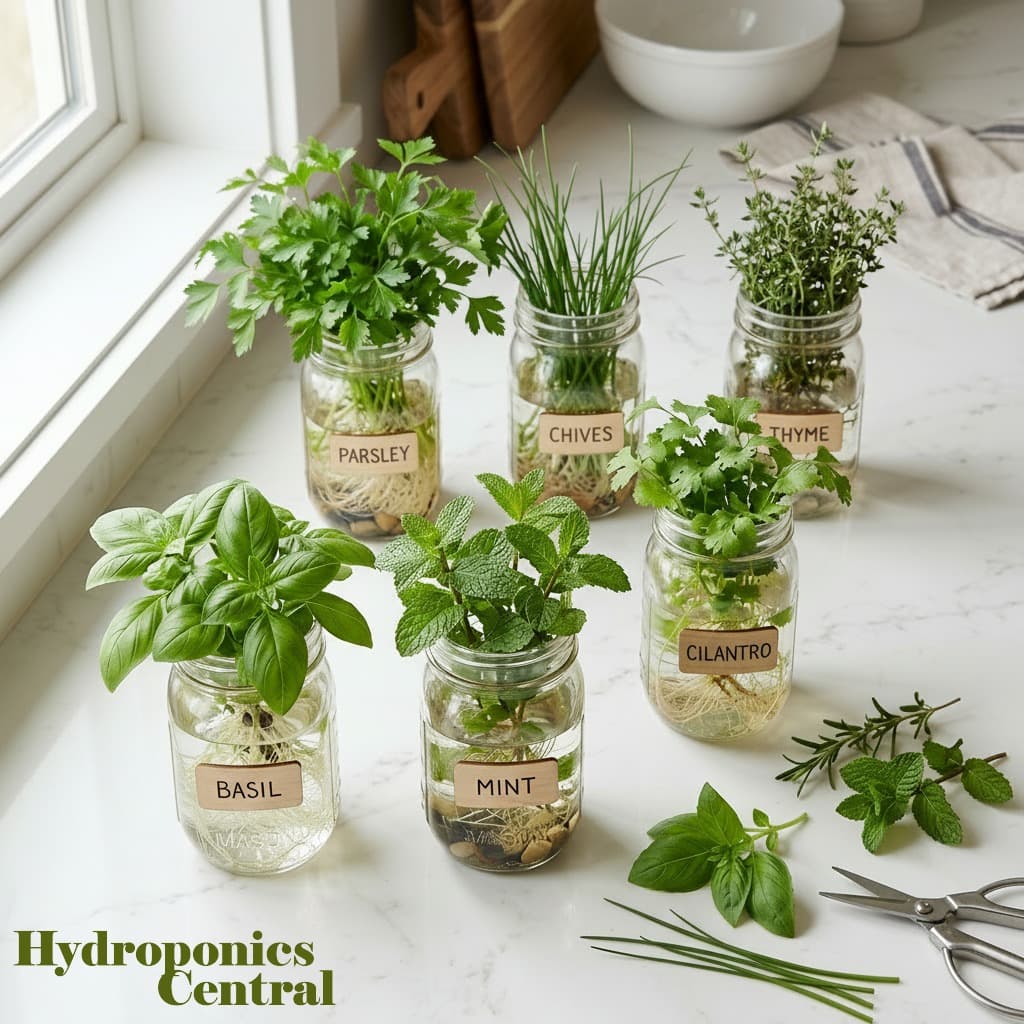
- Budget is your main concern — DWC grows 12 plants for ~$100, Kratky grows one plant per ~$15 jar
- You want to grow large fruiting plants (tomatoes, peppers, cucumbers)
- You want full control and zero vendor lock-in
- You enjoy the hands-on building process
5 common problems with hydroponic garden towers (and how to prevent them)
The five most common problems with hydroponic garden towers are pump failure, algae growth in the reservoir, uneven water distribution, high ongoing pod costs, and insufficient indoor light. All five are preventable — here's what to watch for and what to do when they happen.
1. Pump failure is the most critical hydroponic tower problem — every tower runs on a single submersible pump, and when it fails, aeroponic roots dry out in hours while hydroponic roots lose all nutrient delivery. Pumps in both Gardyn and Lettuce Grow systems have been documented failing at 12–18 months. The fix: buy a $15 spare pump that fits your reservoir before you ever need it. Check monthly for debris at the intake. Clean the intake filter regularly.
2. Algae in the reservoir blocks pump intakes and competes with plants for nutrients — it grows whenever light reaches the nutrient solution. The fix: use an opaque reservoir (some budget towers come with translucent plastic — wrap it in foil if so), keep nutrient solution temperature below 75°F, and clean the tank once a month.
3. Uneven water distribution causes top plants to receive more nutrients while bottom plants dry out — a common issue with undersized pumps and clogged spray nozzles. The fix: rotate the tower 90° each week, clean spray nozzles monthly, and make sure your pump is rated for your tower's full height. Budget towers often ship with undersized pumps that can't push water all the way to the top.
4. Proprietary pod costs add up faster than most buyers expect — on Gardyn and Tower Garden, seed pods need replacing every 2–3 months, and the annual total can exceed what it costs to build an entire DWC system from scratch. The fix: choose an open-system tower (ALTO, budget Amazon) with standard net pots and any seed, or use the Lettuce Grow system with your own seedlings started in rockwool plugs.
5. Leggy, pale plants are a sign of insufficient light — indoor towers away from bright windows produce tall, spindly growth with washed-out leaves that aren't getting enough photosynthesis. The fix: run LED grow lights 14–16 hours daily. Budget towers without included LEDs typically need a separate full-spectrum panel ($20–$60) positioned 6–12 inches from the canopy.
Which hydroponic garden tower is actually worth it — my honest verdict
After going through every major tower system on the market, here's my honest take: towers are one of the best products in hydroponics for a specific kind of person — someone for whom visibility drives consistency.
The $100 DWC tote I describe in our DIY guide grows more food per dollar than any tower on this list. But it almost always ends up in a spare room or garage. Out of sight, out of mind, and eventually abandoned. Towers that sit in kitchens and living rooms actually get tended — and a system you use beats a cheaper system you don't.
For the Lettuce Grow Nook at ~$499–$699, the math works if you're consistent. If you harvest from it twice a week because it's in your eyeline, the per-harvest cost drops to something reasonable over a year. If it turns into a $600 plant stand by month three, skip the tower and build a DWC tote instead.
The Gardyn Home 4 is genuinely impressive — but at $1,400–$1,600 in Year 1, you're paying a steep ongoing premium for the AI convenience. It's the right call only if you're someone who genuinely values plug-and-play growing enough to sustain that cost every year.
My starting point: Lettuce Grow Nook if budget allows and you want something that looks good. ALTO GX (no lights) if you want zero lock-in and already own grow lights. Budget Amazon tower if you want to test the format before spending more.
Join 1,000+ growers getting one curated hydroponic tip every week — subscribe to the Hydroponics Central newsletter. Free, no spam.
Key Takeaways
Quick reference summary
- 1Hydroponic garden towers range from ~$50 (budget Amazon) to ~$899 (Gardyn Home 4) — but the purchase price is only the entry fee. Year 1 total cost ranges from $230 to over $1,600 once you factor in pods, nutrients, and electricity.
- 2The Lettuce Grow Farmstand Nook (~$499–$699 depending on retailer) offers the best balance of price, capacity, and design for most home growers — includes LEDs, holds 20 plants, and avoids a separate $300–$600 lighting purchase.
- 3Towers using proprietary seed pods (Gardyn, Tower Garden) can cost $400–$600/year in pods alone. Open-system towers (ALTO, budget Amazon) use standard net pots with any seed for under $20/year in growing medium.
- 4For pure cost-per-plant, a DWC storage tote (~$100) or Kratky jars (~$15 each) beat any tower by 5–10×. Towers win on space efficiency, aesthetics, and convenience — not value.
- 5Leafy greens and herbs grow well in any tower. Only the Tower Garden brand supports large crops like squash and cauliflower. For tomatoes and peppers, a 5-gallon DWC bucket is often the better choice.
- 6The #1 tower maintenance issue is pump failure — typically at 12–18 months. A $15 backup pump is the cheapest insurance for any tower investment.
Frequently Asked Questions
Common questions from our readers
Written by
Carl — Hydroponics CuratorI research hydroponics so you don't have to — going through university studies, extension programs, and grower communities to find what actually works for home growers.
I'm a content curator and researcher, not a licensed agronomist or commercial grower. Everything published here is sourced from credible third-party research, which is always linked inline. When in doubt, consult your local agricultural extension office. Learn more about how I research →
Found this helpful? Share it!